Talked to some relatives about global warming.....

There is no doubt that climate changes all the time. There is also no doubt that humans CAN and DO have an effect on the speed and direction of that change.

Even if you don't happen to believe that our emissions are a problem, you must admit our fresh water consumption and irrigation drains lakes, inland seas, rivers, etc. That alone alters weather patterns. Deforestation changes weather patterns. Many human activities can alter weather patterns without taking emissions into account.

Why is this movement so committed to denying that? Just because liberals use the fact that "the climate changes and we are affecting it" as an excuse to grow the scope of government doesn't mean that it isn't actually happening. They use EVERYTHING as an excuse to grow government...
 
There is no doubt that climate changes all the time. There is also no doubt that humans CAN and DO have an effect on the speed and direction of that change.

Even if you don't happen to believe that our emissions are a problem, you must admit our fresh water consumption and irrigation drains lakes, inland seas, rivers, etc. That alone alters weather patterns. Deforestation changes weather patterns. Many human activities can alter weather patterns without taking emissions into account.

Why is this movement so committed to denying that? Just because liberals use the fact that "the climate changes and we are affecting it" as an excuse to grow the scope of government doesn't mean that it isn't actually happening. They use EVERYTHING as an excuse to grow government...

Truth.
 
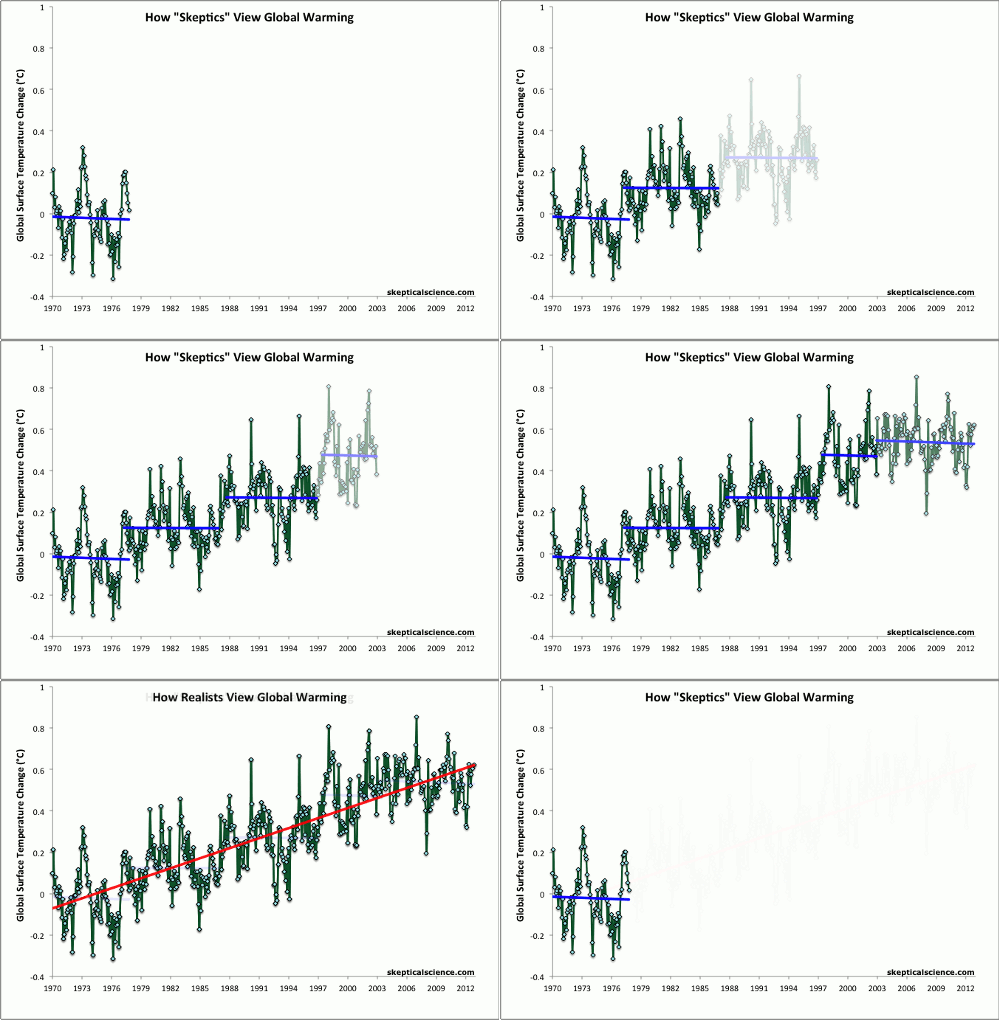
Escalator_2012_500.gif

:rolleyes:

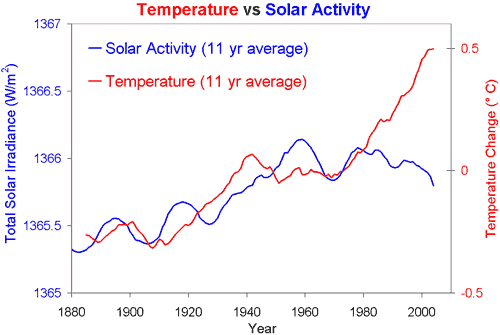
global-temperature-solar-activity-sunspots-last-100-years.jpg
 
There is no doubt that climate changes all the time. There is also no doubt that humans CAN and DO have an effect on the speed and direction of that change.

Even if you don't happen to believe that our emissions are a problem, you must admit our fresh water consumption and irrigation drains lakes, inland seas, rivers, etc. That alone alters weather patterns. Deforestation changes weather patterns. Many human activities can alter weather patterns without taking emissions into account.

Why is this movement so committed to denying that? Just because liberals use the fact that "the climate changes and we are affecting it" as an excuse to grow the scope of government doesn't mean that it isn't actually happening. They use EVERYTHING as an excuse to grow government...

Well there you have it. Quite drinking water and eating. Problem solved. :rolleyes: Elephants in Africa are the main cause of deforestation that led to the African savanna. Let's kill all the elephants to stop global wamring!

Edit: And just to show I'm not making that up....

http://news.yahoo.com/blogs/sideshow/elephants-may-contributing-deforestation-182839238.html

People destory forrests....bad. Elephants destroy forrests....act of nature.
 
Last edited:

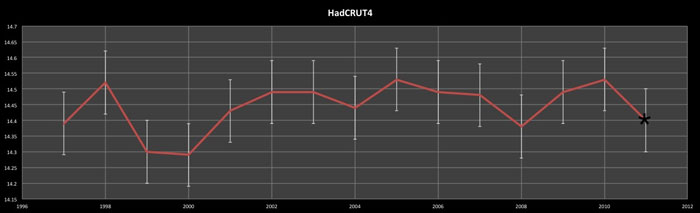
And in the past 15 years there has been no significant warming at all.

HadCRUT4star700.jpg


So despite dire predictions by your side, global warming has leveled off. This has been an embarassment to the claims by your side that the ice caps would be gone by now (they are expanding) or that temperatures would be much higher than they are now.
 
http://www.telegraph.co.uk/earth/en...dmit-global-warming-forecasts-were-wrong.html


Top climate scientists admit global warming forecasts were wrong
Top climate scientists have admitted that their global warming forecasts are wrong and world is not heating at the rate they claimed it was in a key report.
The vast majority of scientists are persuaded that climate change is real - where there is scope for disagreement is over the solutions
The IPCC maintain that they are 95 per cent certain that global warming is caused by humans Photo: Reuters

By Hayley Dixon

3:45PM BST 15 Sep 2013

Comments749 Comments

A leaked draft of a report by the UN Intergovernmental Panel on Climate Change is understood to concede that the computer predictions for global warming and the effects of carbon emissions have been proved to be inaccurate.

The report, to be published later this month, is a six year assessment which is seen as the gospel of climate science and is cited to justify fuel taxes and subsidies for renewable energy.

The “summary for policymakers” of the report, seen by the Mail on Sunday, states that the world is warming at a rate of 0.12C per decade since 1951, compared to a prediction of 0.13C per decade in their last assessment published in 2007.

Other admission in the latest document include that forecast computers may not have taken enough notice of natural variability in the climate, therefore exaggerating the effect of increased carbon emissions on world temperatures.

The governments which fund the IPCC have tabled 1,800 questions in relation to the report.
Related Articles

'Scientists urged to cover up slow in global warming'
20 Sep 2013

Row over IPCC report as nations 'try to hide lack of climate change’
21 Sep 2013

‘Hack the planet to counter climate change,’ says Lord Rees
12 Sep 2013

Climate change killed the woolly mammoth, researchers claim
11 Sep 2013

Summers are getting hotter – honest
11 Sep 2013

Graphene: the super-light material with heavyweight power Braun

One of the central issues is believed to be why the IPCC failed to account for the “pause” in global warming, which they admit that they did not predict in their computer models. Since 1997, world average temperatures have not shown any statistically significant increase.

The summary also shows that scientist have now discovered that between 950 and 1250 AD, before the Industrial Revolution, parts of the world were as warm for decades at a time as they are now.

Despite a 2012 draft stating that the world is at it’s warmest for 1,300 years, the latest document states: “'Surface temperature reconstructions show multi-decadal intervals during the Medieval Climate Anomaly (950-1250) that were in some regions as warm as in the late 20th Century.”

The 2007 report included predictions of a decline in Antarctic sea ice, but the latest document does not explain why this year it is at a record high.

The 2013 report states: “'Most models simulate a small decreasing trend in Antarctic sea ice extent, in contrast to the small increasing trend in observations ...

“There is low confidence in the scientific understanding of the small observed increase in Antarctic sea ice extent.'

The 2007 forecast for more intense hurricanes has also been ignored in the new document after this year was one of the quietest hurricane seasons in history.

One of the report's authors, Professor Myles Allen, the director of Oxford University's Climate Research Network, has said that people should not look to the IPCC for a “bible” on climate change.

Professor Allen, who admits “we need to look very carefully about what the IPCC does in future”, said that he could not comment on the report as it was still considered to be in its draft stages.

However, he added: “It is a complete fantasy to think that you can compile an infallible or approximately infallible report, that is just not how science works.

“It is not a bible, it is a scientific review, an assessment of the literature. Frankly both sides are seriously confused on how science works - the critics of the IPCC and the environmentalists who credit the IPCC as if it is the gospel."

Scientist were constantly revising their research to account for new data, he said.

Despite the uncertainties and contradictions, the IPCC insists that it is more confident than ever – 95 per cent certain - that global warming is mainly human’s fault.

Next week 40 of the 250 authors who contributed to the report and representatives of most of the 195 governments that fund the IPCC will hold a meeting in Stockholm to discuss the finding to discuss any issues ahead of the publication. The body has insisted that this is not a crisis meeting but a pre-planned discussion.
 
[
And in the past 15 years there has been no significant warming at all.

HadCRUT4star700.jpg


So despite dire predictions by your side, global warming has leveled off. This has been an embarassment to the claims by your side that the ice caps would be gone by now (they are expanding) or that temperatures would be much higher than they are now.

Nuccitelli_Fig1.jpg

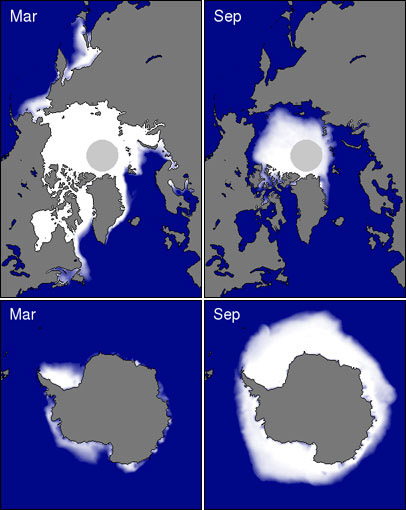
SeaIce.jpg

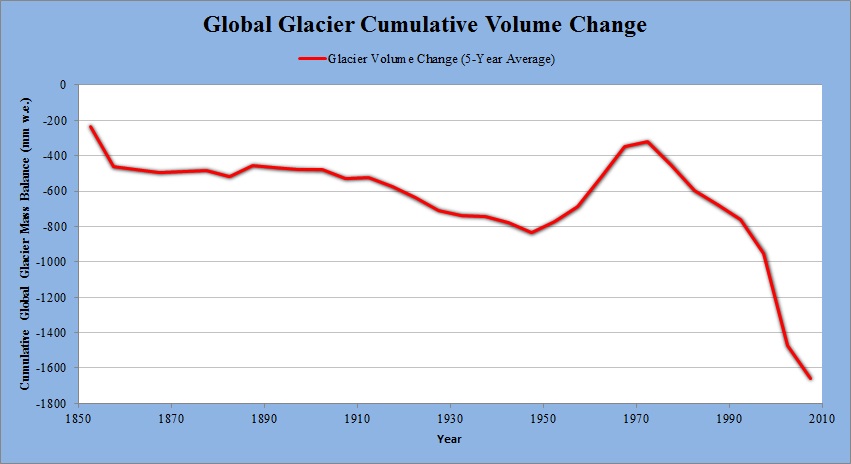
GlobalGlacierVolumeChange.jpg
 
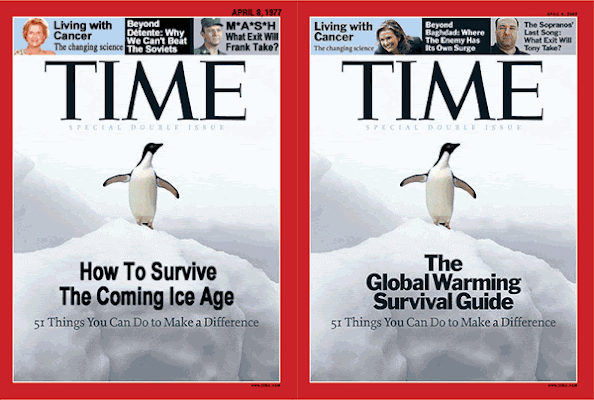
Science is supposed to be based on the idea of testable hypothesis. The hypotheses build around the global warming mythology have not turned out to be true when tested. I guess it will eventually go back to "global cooling."

03-06e.gif
 
http://www.washingtonpost.com/blogs...tic-sea-ice-hit-35-year-record-high-saturday/
Antarctic sea ice hit 35-year record high Saturday

By Jason Samenow
September 23 at 3:23 pm

More

172
Comments
Antarctic sea ice extent Sunday compared to 1979-2000 normal (NSIDC)

Antarctic sea ice extent on September 22 compared to 1981-2010 median depicted by orange curve (NSIDC)

Antarctic sea ice has grown to a record large extent for a second straight year, baffling scientists seeking to understand why this ice is expanding rather than shrinking in a warming world.

On Saturday, the ice extent reached 19.51 million square kilometers, according to data posted on the National Snow and Ice Data Center Web site. That number bested record high levels set earlier this month and in 2012 (of 19.48 million square kilometers). Records date back to October 1978.
(NSIDC)

(NSIDC)

The increasing ice is especially perplexing since the water beneath the ice has warmed, not cooled.

“The overwhelming evidence is that the Southern Ocean is warming,” said Jinlun Zhang, a University of Washington scientist, studying Antarctic ice. “Why would sea ice be increasing? Although the rate of increase is small, it is a puzzle to scientists.”

In a new study in the Journal of Climate, Zhang finds both strengthening and converging winds around the South Pole can explain 80 percent of the increase in ice volume which has been observed.

“The polar vortex that swirls around the South Pole is not just stronger than it was when satellite records began in the 1970s, it has more convergence, meaning it shoves the sea ice together to cause ridging,” the study’s press release explains. “Stronger winds also drive ice faster, which leads to still more deformation and ridging. This creates thicker, longer-lasting ice, while exposing surrounding water and thin ice to the blistering cold winds that cause more ice growth.”

But no one seems to have a conclusive answer as to why winds are behaving this way.

“I haven’t seen a clear explanation yet of why the winds have gotten stronger,” Zhang told Michael Lemonick of Climate Central.

Some point to stratospheric ozone depletion, but a new study published in the Journal of Climate notes that computer models simulate declining – not increasing – Antarctic sea ice in recent decades due to this phenomenon (aka the ozone “hole”).

“This modeled Antarctic sea ice decrease in the last three decades is at odds with observations, which show a small yet statistically significant increase in sea ice extent,” says the study, led by Colorado State University atmospheric scientist Elizabeth Barnes.

A recent study by Lorenzo Polvani and Karen Smith of Columbia University says the model-defying sea ice increase may just reflect natural variability.

If the increase in ice is due to natural variability, Zhang says, warming from manmade greenhouse gases should eventually overcome it and cause the ice to begin retreating.

“If the warming continues, at some point the trend will reverse,” Zhang said.

However, a conclusion of the Barnes study is that the recovery of the stratospheric ozone layer – now underway – may slow/delay Antarctic warming and ice melt.

Ultimately, it’s apparent the relationship between ozone depletion, climate warming from greenhouse gases, natural variability, and how Antarctic ice responds is all very complicated. In sharp contrast, in the Arctic, there seems to be a relatively straight forward relationship between temperature and ice extent.

Related: Arctic sea ice has *not* recovered, in 7 visuals

Thus, in the Antarctic, we shouldn’t necessarily expect to witness the kind of steep decline in ice that has occurred in the Arctic.

“…the seeming paradox of Antarctic ice increasing while Arctic ice is decreasing is really no paradox at all,” explains Climate Central’s Lemonick. “The Arctic is an ocean surrounded by land, while the Antarctic is land surrounded by ocean. In the Arctic, moreover, you’ve got sea ice decreasing in the summer; at the opposite pole, you’ve got sea ice increasing in the winter. It’s not just an apples-and-oranges comparison: it’s more like comparing apple pie with orange juice.”

Related: Antarctic sea ice reaches greatest extent so late in season, 2nd largest extent on record
 
http://www.washingtonpost.com/blogs...tic-sea-ice-hit-35-year-record-high-saturday/
Antarctic sea ice hit 35-year record high Saturday

By Jason Samenow
September 23 at 3:23 pm

More

172
Comments
Antarctic sea ice extent Sunday compared to 1979-2000 normal (NSIDC)

Antarctic sea ice extent on September 22 compared to 1981-2010 median depicted by orange curve (NSIDC)

Antarctic sea ice has grown to a record large extent for a second straight year, baffling scientists seeking to understand why this ice is expanding rather than shrinking in a warming world.

On Saturday, the ice extent reached 19.51 million square kilometers, according to data posted on the National Snow and Ice Data Center Web site. That number bested record high levels set earlier this month and in 2012 (of 19.48 million square kilometers). Records date back to October 1978.
(NSIDC)

(NSIDC)

The increasing ice is especially perplexing since the water beneath the ice has warmed, not cooled.

“The overwhelming evidence is that the Southern Ocean is warming,” said Jinlun Zhang, a University of Washington scientist, studying Antarctic ice. “Why would sea ice be increasing? Although the rate of increase is small, it is a puzzle to scientists.”

In a new study in the Journal of Climate, Zhang finds both strengthening and converging winds around the South Pole can explain 80 percent of the increase in ice volume which has been observed.

“The polar vortex that swirls around the South Pole is not just stronger than it was when satellite records began in the 1970s, it has more convergence, meaning it shoves the sea ice together to cause ridging,” the study’s press release explains. “Stronger winds also drive ice faster, which leads to still more deformation and ridging. This creates thicker, longer-lasting ice, while exposing surrounding water and thin ice to the blistering cold winds that cause more ice growth.”

But no one seems to have a conclusive answer as to why winds are behaving this way.

“I haven’t seen a clear explanation yet of why the winds have gotten stronger,” Zhang told Michael Lemonick of Climate Central.

Some point to stratospheric ozone depletion, but a new study published in the Journal of Climate notes that computer models simulate declining – not increasing – Antarctic sea ice in recent decades due to this phenomenon (aka the ozone “hole”).

“This modeled Antarctic sea ice decrease in the last three decades is at odds with observations, which show a small yet statistically significant increase in sea ice extent,” says the study, led by Colorado State University atmospheric scientist Elizabeth Barnes.

A recent study by Lorenzo Polvani and Karen Smith of Columbia University says the model-defying sea ice increase may just reflect natural variability.

If the increase in ice is due to natural variability, Zhang says, warming from manmade greenhouse gases should eventually overcome it and cause the ice to begin retreating.

“If the warming continues, at some point the trend will reverse,” Zhang said.

However, a conclusion of the Barnes study is that the recovery of the stratospheric ozone layer – now underway – may slow/delay Antarctic warming and ice melt.

Ultimately, it’s apparent the relationship between ozone depletion, climate warming from greenhouse gases, natural variability, and how Antarctic ice responds is all very complicated. In sharp contrast, in the Arctic, there seems to be a relatively straight forward relationship between temperature and ice extent.

Related: Arctic sea ice has *not* recovered, in 7 visuals

Thus, in the Antarctic, we shouldn’t necessarily expect to witness the kind of steep decline in ice that has occurred in the Arctic.

“…the seeming paradox of Antarctic ice increasing while Arctic ice is decreasing is really no paradox at all,” explains Climate Central’s Lemonick. “The Arctic is an ocean surrounded by land, while the Antarctic is land surrounded by ocean. In the Arctic, moreover, you’ve got sea ice decreasing in the summer; at the opposite pole, you’ve got sea ice increasing in the winter. It’s not just an apples-and-oranges comparison: it’s more like comparing apple pie with orange juice.”

Related: Antarctic sea ice reaches greatest extent so late in season, 2nd largest extent on record

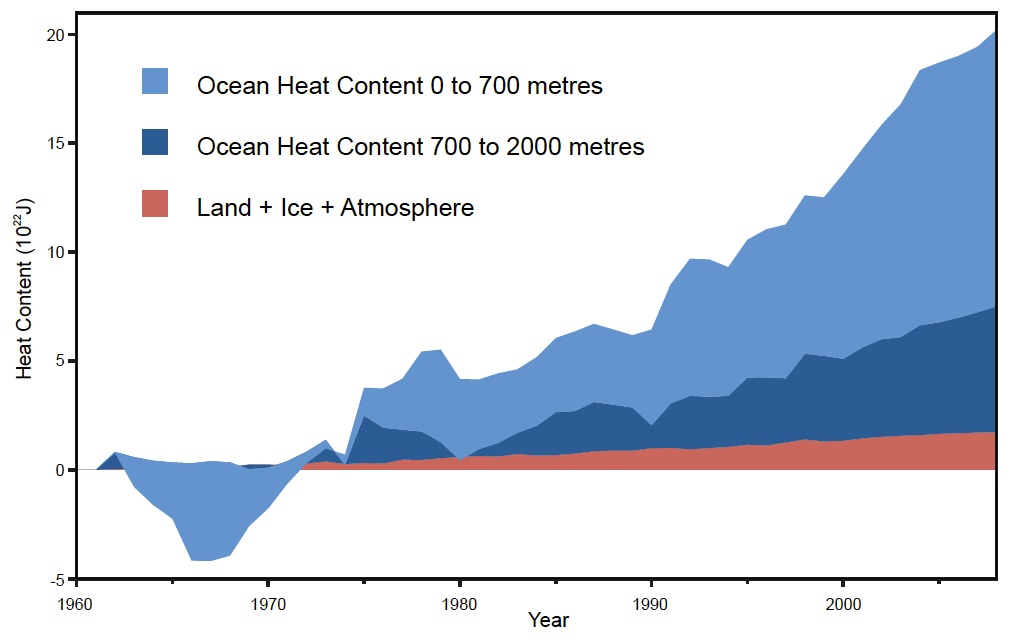
F5.large.jpg
 
People destory forrests....bad. Elephants destroy forrests....act of nature.

I agree with your sarcasm. We have the ability to destroy on such a massive scale, and we also have the ability to harvest responsibly without permanent destruction. Animals don't have the capacity to think like that. So yes, I think it is immoral for humans to destroy the earth. Animals cannot be held to moral standards.
 
http://www.washingtonpost.com/blogs...tic-sea-ice-hit-35-year-record-high-saturday/
Antarctic sea ice hit 35-year record high Saturday

By Jason Samenow
September 23 at 3:23 pm

More

172
Comments
Antarctic sea ice extent Sunday compared to 1979-2000 normal (NSIDC)

Antarctic sea ice extent on September 22 compared to 1981-2010 median depicted by orange curve (NSIDC)

Antarctic sea ice has grown to a record large extent for a second straight year, baffling scientists seeking to understand why this ice is expanding rather than shrinking in a warming world.

On Saturday, the ice extent reached 19.51 million square kilometers, according to data posted on the National Snow and Ice Data Center Web site. That number bested record high levels set earlier this month and in 2012 (of 19.48 million square kilometers). Records date back to October 1978.
(NSIDC)

(NSIDC)

The increasing ice is especially perplexing since the water beneath the ice has warmed, not cooled.

“The overwhelming evidence is that the Southern Ocean is warming,” said Jinlun Zhang, a University of Washington scientist, studying Antarctic ice. “Why would sea ice be increasing? Although the rate of increase is small, it is a puzzle to scientists.”

In a new study in the Journal of Climate, Zhang finds both strengthening and converging winds around the South Pole can explain 80 percent of the increase in ice volume which has been observed.

“The polar vortex that swirls around the South Pole is not just stronger than it was when satellite records began in the 1970s, it has more convergence, meaning it shoves the sea ice together to cause ridging,” the study’s press release explains. “Stronger winds also drive ice faster, which leads to still more deformation and ridging. This creates thicker, longer-lasting ice, while exposing surrounding water and thin ice to the blistering cold winds that cause more ice growth.”

But no one seems to have a conclusive answer as to why winds are behaving this way.

“I haven’t seen a clear explanation yet of why the winds have gotten stronger,” Zhang told Michael Lemonick of Climate Central.

Some point to stratospheric ozone depletion, but a new study published in the Journal of Climate notes that computer models simulate declining – not increasing – Antarctic sea ice in recent decades due to this phenomenon (aka the ozone “hole”).

“This modeled Antarctic sea ice decrease in the last three decades is at odds with observations, which show a small yet statistically significant increase in sea ice extent,” says the study, led by Colorado State University atmospheric scientist Elizabeth Barnes.

A recent study by Lorenzo Polvani and Karen Smith of Columbia University says the model-defying sea ice increase may just reflect natural variability.

If the increase in ice is due to natural variability, Zhang says, warming from manmade greenhouse gases should eventually overcome it and cause the ice to begin retreating.

“If the warming continues, at some point the trend will reverse,” Zhang said.

However, a conclusion of the Barnes study is that the recovery of the stratospheric ozone layer – now underway – may slow/delay Antarctic warming and ice melt.

Ultimately, it’s apparent the relationship between ozone depletion, climate warming from greenhouse gases, natural variability, and how Antarctic ice responds is all very complicated. In sharp contrast, in the Arctic, there seems to be a relatively straight forward relationship between temperature and ice extent.

Related: Arctic sea ice has *not* recovered, in 7 visuals

Thus, in the Antarctic, we shouldn’t necessarily expect to witness the kind of steep decline in ice that has occurred in the Arctic.

“…the seeming paradox of Antarctic ice increasing while Arctic ice is decreasing is really no paradox at all,” explains Climate Central’s Lemonick. “The Arctic is an ocean surrounded by land, while the Antarctic is land surrounded by ocean. In the Arctic, moreover, you’ve got sea ice decreasing in the summer; at the opposite pole, you’ve got sea ice increasing in the winter. It’s not just an apples-and-oranges comparison: it’s more like comparing apple pie with orange juice.”

Related: Antarctic sea ice reaches greatest extent so late in season, 2nd largest extent on record

Did you read the article? The ice is acting this way due to "unusual wind patterns". IE, climate change.
 
LOL @ climate change people.

It doesn't matter if the change supports their argument or not, they can't lose, because no matter what happens, "it's because of climate change."
 
The CBO has a report on the effects of a Carbon tax on the economy for everyone to see.

Trollin' trollin' trollin'...keep those posts a flowin'...act like you be knowin'....troll onnnnnnnn,.....

Note that you haven't actually addressed anything I've posted. The IPCC's predictions were wrong. Deal with it.
 
Back
Top