
alucard13mmfmj
Member
- Joined
- Jan 10, 2012
- Messages
- 3,899
lol.. raising minimum wage because the dollar is being devalued. lol.


The total amount of money does not have to increase for consumers to have more money to spend. It really can be as simple as just consumers having more money to spend because of higher wages, but things costing more. The compensation for higher wages can really be that simple.

Wages aren't the same thing as worth. If you hand out more cash from your own supply, but take more back in, then this absolutely can be achieved without necessarily increasing the overall money supply. Your assertion only holds water if the poorer are keeping more of their money. Especially when you consider that necessary cost of living increases will inevitably lower their ability to save and accumulate worth, then wages do not have to be tied to the monetary supply if price evens it out or even makes for more profits.Government can make some subset of the population's wages go up relative to everyone else's with legislation. But they can't make the whole population's wages go up simultaneously unless they increase the money supply. Your repeated assertion that they can doesn't change the laws of economics.
Wages aren't the same thing as worth. If you hand out more cash from your own supply, but take more back in, then this absolutely can be achieved without necessarily increasing the overall money supply. Your assertion only holds water if the poorer are keeping more of their money. Especially when you consider that necessary cost of living increases will inevitably lower their ability to save and accumulate worth, then wages do not have to be tied to the monetary supply if price evens it out or even makes for more profits.
This can of course be aided and influenced by inflation, but your continued assertion that inflation is the only thing that has large effect here is flat-out wrong (if I'm understanding you correctly, because I'm starting to get really confused about what we're even arguing anymore).
Here is a video from Milton Friedman. Most of it is about how MW raises disproportionately effect the minorities it claims to help, but listen to from about 3:13 in particular about who this policy really helps:
This is something I'd forgotten about (there are so many flaws in minimum wage laws its tough to keep track), but MW raises only make it tougher for smaller competitors to compete with what they have streamlined... And since competition is another one of those pesky factors that have little to do with money supply, I'd again say your assertion that inflation is the only important factor is flat out false. It is but one way that the privileged manage to manipulate the economy in their favor.
The "they" is the consumers who pay it back to you after you raise wages across the board.Don't misunderstand me. I'm not defending the minimum wage. I agree that it hurts people. I'm just saying that the argument that it causes inflation is not a valid argument. I'd be shocked if Friedman said it was. After all, it was he who said, "Inflation is always and everywhere a monetary phenomenon."
When you keep saying things like "If you hand out more cash from your own supply, but take more back in..." you're doing what the previous poster pointed out, which is expanding from what happens to one subset of the economy (in this case your "you") to the whole economy. Without increasing the money supply, then for every "you" this happens to, there is another "they" where the opposite happens.
What I am calling inflation is an increase in the money supply.The "they" is the consumers who pay it back to you. If we're talking on individual levels, then what you call "inflation" is wealth accumulation, and thus not inlflation at all.
What I'm saying is that the former is NOT inflation. Only the latter is.It is just silly that you'd compare a normal employee/employer/consumer relationship where the owner of the business has created the relationship with his own capital, and apply that to what the Feds do, which is print money out of thin air. The marked difference is that the former is putting up their wealth without expanding the overall supply. You ever heard the saying, it takes money to make money? That's what's going on here, not inflation.
That's not inflation. That's a change in prices in one subset of the economy. People will decide to spend less getting their nails done so that they can afford the more expensive gold watch, and then the price of getting one's nails done will go down. They won't just keep buying the same amount of gold, while they have to pay higher prices for it, and still buy the same amount of everything else at the same time, without paying lower prices for something. Net inflation is zero.If gold costs more, then gold watches are going to cost more.
Not everything. At least not just because of gas prices. If inflation goes up, it's a monetary phenomenon, like Friedman said.If gas prices go up, well, just go to the store right now. Everything is way expensive.
OK sorry, pretty much everything is affected by gas prices. However, this simply does not mean that prices have to go down somewhere else. Understand? Because I really am done trying to explain how prices do not necessarily have to negatively correlate with one another. Costs and prices are correlated, and there can be a positive correlation between prices (what I'm arguing) but the price of one thing does not negatively correlate with the price of something else. That is simply false.Not everything. At least not just because of gas prices. If inflation goes up, it's a monetary phenomenon, like Friedman said.
Correct. It only means that if the money supply stays constant.OK sorry, pretty much everything is affected by gas prices. However, this simply does not mean that prices have to go down somewhere else.
RoyL?That is simply false.
You keep bringing this up. I don't see how it fits in. Are you saying that raising the minimum wage causes the rate of savings to go down? If you are, I'd like to know why you make that connection. And more importantly, supposing that does happen, is the reduction in the savings rate permanent, such that people just keep depleting their bank accounts without ever adding to them again and going into debt without ever paying it down? Or will the savings rate get back to normal again, in which case, its affect on the money in circulation will only have been temporary, and the long-term marriage between the money supply and inflation will remain in tact?It also doesn't mean that the overall amount of money in circulation has to be expanded, when there is plenty of unused capital in plenty of bank accounts already.
Of course it's going to have an effect. It's going to have countless effects, as I have said all along. In some parts of the economy these effects will involve prices going up relative to other prices. In other parts they will involve prices going down relative to other prices.Prices are a reflection of supply and demand on both the labor and consumer side, and any manipulation of that is going to have an effect.
Raising the minimum wage does not force everyone to pay more for everything. It forces some people to pay more for some things.Again, if the government forces EVERYONE to pay more, then everyone is going to charge more, and don't need inflation to support this.
How do you not understand this?You keep bringing this up. I don't see how it fits in. Are you saying that raising the minimum wage causes the rate of savings to go down? If you are, I'd like to know why you make that connection. And more importantly, supposing that does happen, is the reduction in the savings rate permanent, such that people just keep depleting their bank accounts without ever adding to them again and going into debt without ever paying it down? Or will the savings rate get back to normal again, in which case, its affect on the money in circulation will only have been temporary, and the long-term marriage between the money supply and inflation will remain in tact?
Thus, you invest more in your employee's wages, you charge more, you make as much if not more than the profit level you made.
If at any point in this thread you thought I said that minimum wage would not increase some prices, you misread what I said. But inflation isn't just some prices increasing while others decrease.Also, do you know what competition does? It drives prices down. What then would you suppose that lowering competition will do? You got it. It will raise prices.
Companies do do that already. Why do you think they don't just pay everyone minimum wage? Because they have competition for skilled labor.If you can do that, then why not do it already? Why wait for the government to increase the minimum wage?
If they're already charging the price that maximizes their profits (which I agree they are), then how could they raise their price and still make even more profits?Companies do do that already.
But you said they could raise their employees' wages, raise the prices they charge their customers, and raise their own profits all at the same time. If that's the case, then they shouldn't pay anyone at all minimum wage. They should pay everyone as much as they want, while they charge whatever price they have to to earn the revenue they need to pay them, and all their customers will just keep buying as much as they ever did, and their profits will go up. It's the magical world of TheGrinchWhoStoleDC, where there really is such a thing as a free lunch.Why do you think they don't just pay everyone minimum wage? Because they have competition for skilled labor.
Because it's another way it restricts competition. The make more profits through these types of regulations that only serve as more barriers for entry for others. The big boys have ways to ease the burden of higher wages that can otherwise cripple smaller businesses who cannot afford to pay or charge what they're forced to. Friedman and Dr. Paul back me up on how the regulatory environment works.If they're already charging the price that maximizes their profits (which I agree they are), then how could they raise their price and still make even more profits?
I honestly have no clue what this whole paragraph means.But you said they could raise their employees' wages, raise the prices they charge their customers, and raise their own profits all at the same time. If that's the case, then they shouldn't pay anyone at all minimum wage. They should pay everyone as much as they want, while they charge whatever price they have to to earn the revenue they need to pay them, and all their customers will just keep buying as much as they ever did, and their profits will go up. It's the magical world of TheGrinchWhoStoleDC, where there really is such a thing as a free lunch.

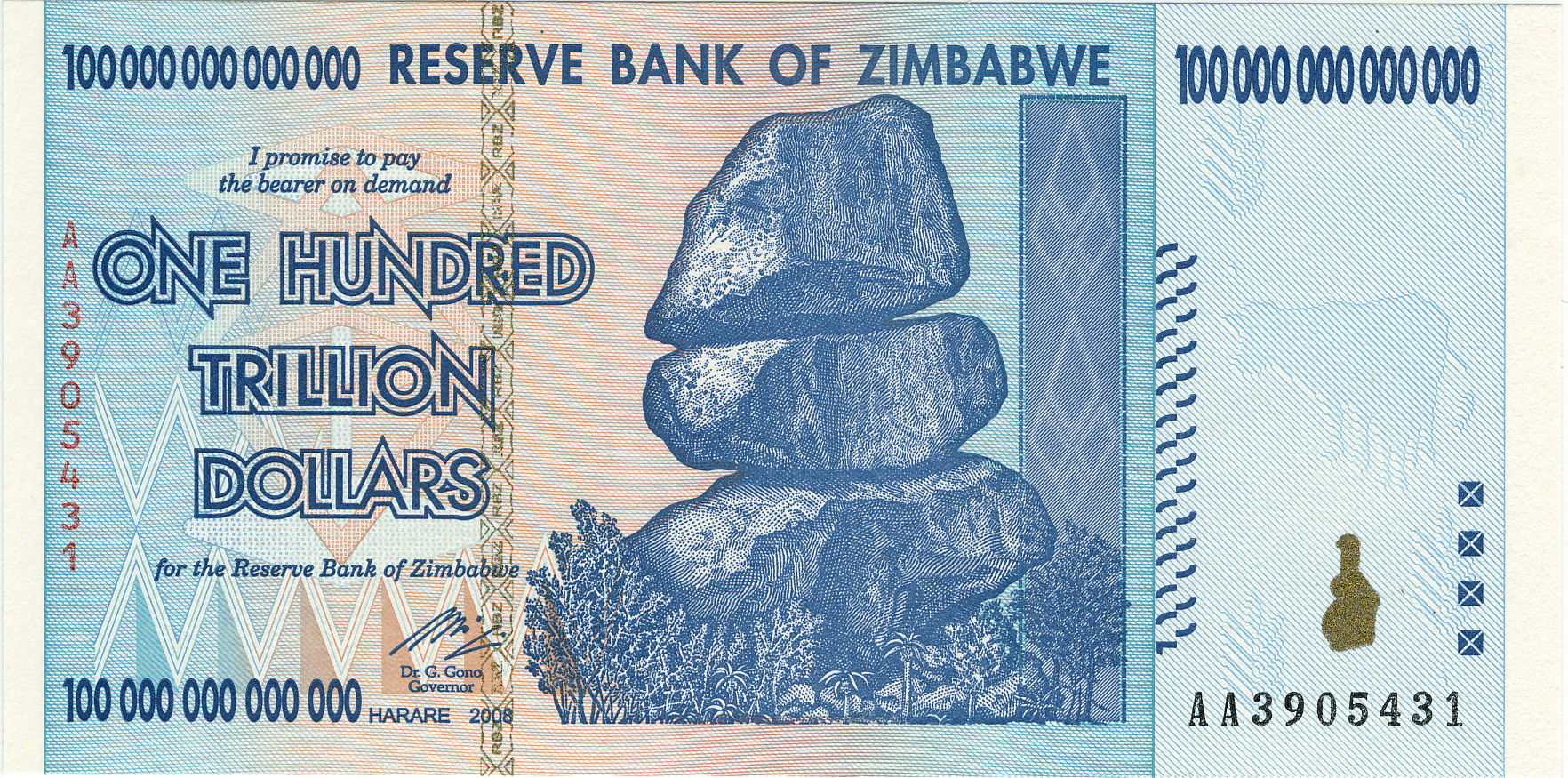
I hope they raise the minimum wage to a million dollars so that we can all be millionaires!
Because it's another way it restricts competition. The make more profits through these types of regulations that only serve as more barriers for entry for others. The big boys have ways to ease the burden of higher wages that can otherwise cripple smaller businesses who cannot afford to pay or charge what they're forced to. Friedman and Dr. Paul back me up on how the regulatory environment works.
The former is how they maximize profits in a truly free market. The latter is how they maximize mroe profits in a manipulated market? Understand?
Well, of course the skilled ones will find a home at your growing company!Then what happens to all the people who work for those smaller competitors who have to go out of business?
Well, of course the skilled ones will find a home at your growing company!
But no, massive unemployment isn't good for anyone. That's yet another reason the Keynesians are always manipulating the system in all of these different ways that favor them.
Yes, most definitely, which is part of why it's such a flawed model that only benefits a select few (again, Freidman and Dr. Paul know better than me about this and back this up).So raising the minimum wage increases unemployment?
Yes, most definitely.
OMG - the stupidest thing I am going to read all day was right there in those comments.
Steven P. Schonfeld Top Commenter · Wayne State University
I have seen free market choice destroy this city. From the 40's to the '90's, people left for one reason, and one reason only: black people started moving in, and racist whites weren't having it. If government got involved and stopped them from leaving, Detroit would still be on the level with New York and Chicago.
Dekulakization
Telegrams are pouring in from numerous parts of the Soviet Union with the news that deeds of arson and murders of active Communists are being perpetrated by the Kulaks… Soviet farms, village libraries and Soviet bureaus have been burned down by the Kulaks in their fierce opposition against all measures undertaken by our Communist Party and our Soviet Government… Murderous attacks have been perpetrated against Communist village school teachers and social workers, women as well as men… Seven murders and four attempted murders took place in public assemblies or in Soviet bureaus. The roll of our Communist dead contains the names of four Chairmen of local Soviets and one Secretary… A destructive blow at the Kulaks must be delivered immediately!
—Izvestia, November 1928[7]
In 1928 there was a food shortage in the cities and in the army. In response the Soviet government encouraged the formation of collective farms and, in 1929, introduced a policy of mandatory collectivization. Many peasants were attracted to collectivization by the idea that they would be able to afford tractors to generate increased production.
In July 1929 it remained official Soviet policy that the kulak should not be terrorised and should be enlisted into the collective farms. Joseph Stalin disagreed with this, saying, "Now we have the opportunity to carry out a resolute offensive against the kulaks, break their resistance, eliminate them as a class and replace their production with the production of kolkhozes and sovkhozes."[8]
On 30 January 1930 the Politburo approved of the extermination of kulaks as a class. Three separate categories for the kulaks were designated. The first consisted of kulaks to be sent to the Gulags, the second was for kulaks to be relocated to distant parts of the USSR (such as the north Urals and Kazahkstan), and the third to other parts of their province.[9]


