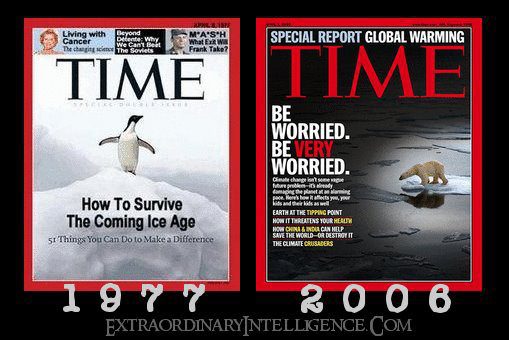
So then don't ask me why Time magazine says one thing or the other, unless you want to listen to them.
Do you even keep track of what you are talking about, or do you just throw out whatever comment happens to pop into you skull at any given moment?
You - repeat: YOU - are the one who responded (post #42) to the poster who brought up the Time magazine thing. I replied to YOUR response by pointing out that the analogy you had used was invalid. Nothing more. Nothing less.
If you have such contempt for media coverage of these kinds of things, perhaps you should indulge that contempt by doing something other than basing faulty analogies upon it.
But if you do so anyway, you certainly have no business hypocritically lecturing others about paying attention to such contradictory media stories. You don't get to have it both ways.
In that case, as long as I can find scientists (which are most, sadly for you), that have never claimed global cooling was coming, but have always claimed global warming was, then they're at least more credible than Time magazine's sensational covers?
(Aside: for the sake of clarity, you should not put question marks at the end of sentences that are not in an interrogative form - it makes your statements appear weak, tentative and/or confused.)
Sadly for me? How so? I have said absolutely nothing regarding what "most scientists you can find" have claimed about anything (except to make the general observation that "scientific consensus" is no less prone to the phenomenon of groupthink than any other human endeavor that involves mutually-reinforcing assessments of information).
Further, your use of "sadly for you" indicates that you have made entirely baseless presumptions about how I have assessed the issues of "global warming/cooling" or "climate change" (or whatever it is now being called). This is not surprising. In my experience, those who most loudly bruit about their alliegance to "science & reason" are highly prone to indulging in presumptions about what their interlocutors think or believe, as well as to engaging in ad populum ("scientific consensus") and ad verecundiam ("scientists say it is so") fallacies - all of which you have done in this thread.