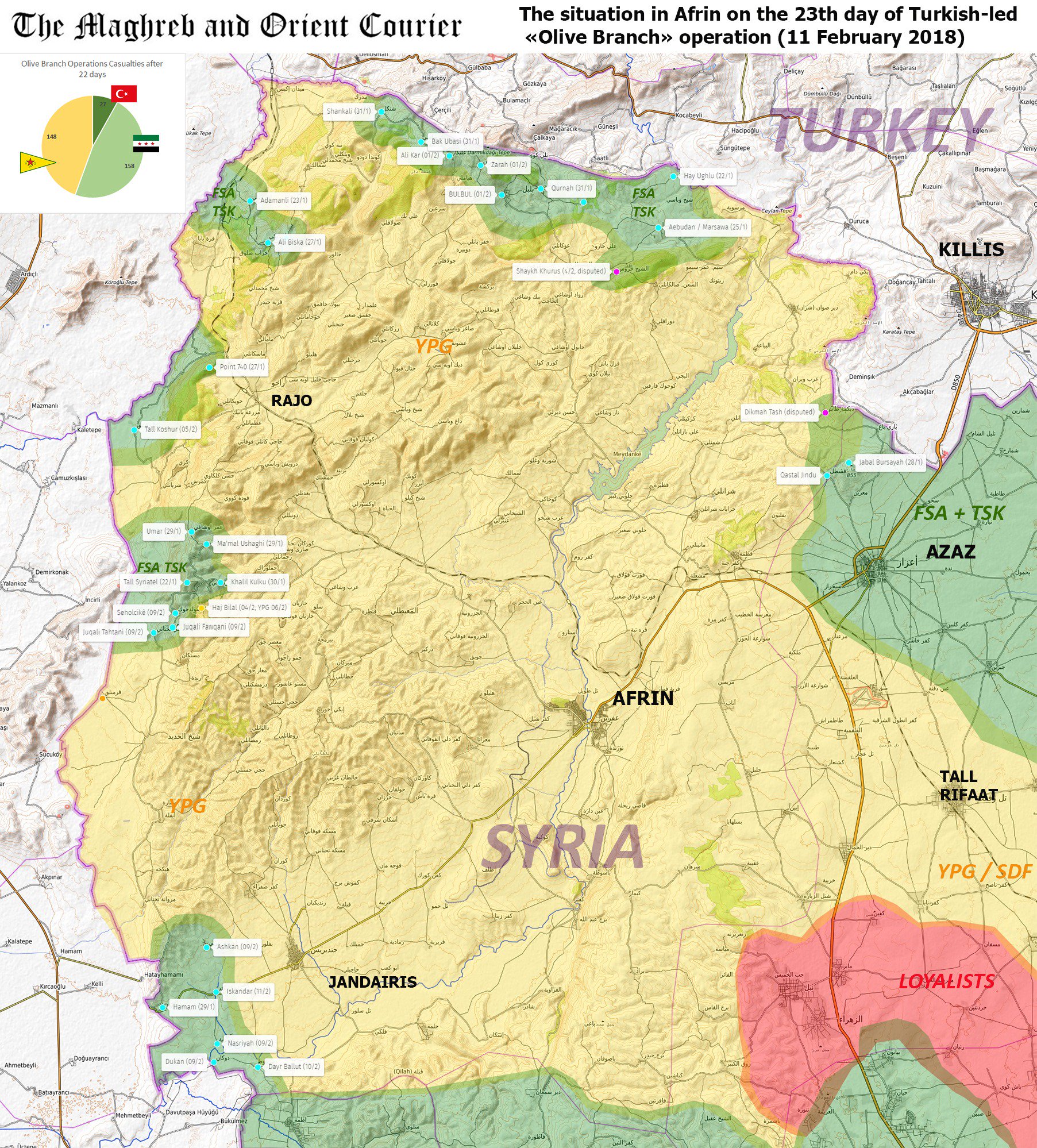
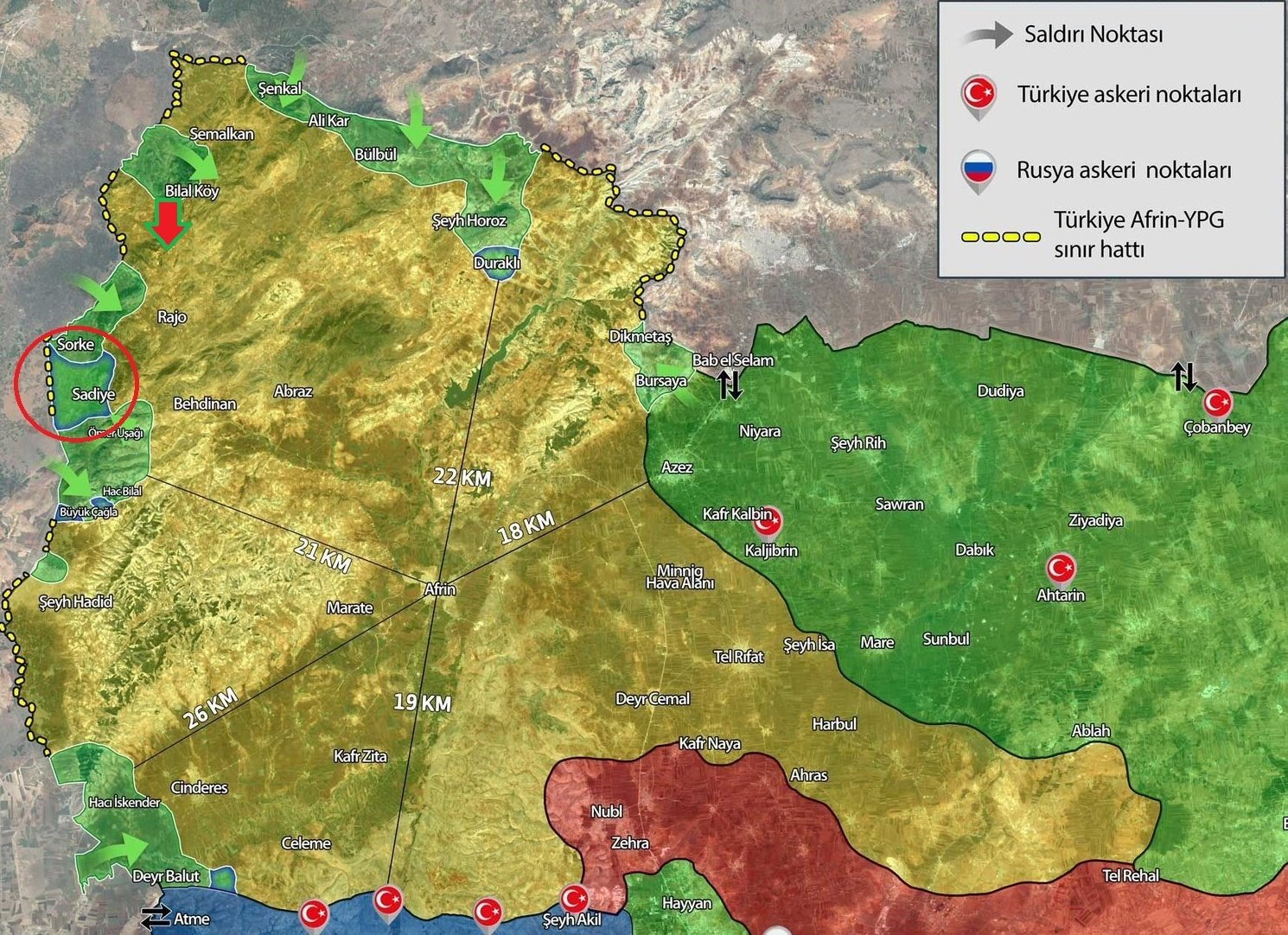
Turkey’s recent incursion into northern Syria is poised to finally establish the long-sought after “buffer zone” or “safe haven” called for by US policymakers since as early as 2012.
While the US and Turkey are currently feigning a diplomatic row over the incursion – with Turkey’s targeting and displacement of Kurds allegedly backed by the United States – it is clear that recent claims by the US regarding its expanding support of Kurdish militias it has been arming and backing in Syria was done as an intentional pretext for Turkey to justify an otherwise indefensible invasion of Syrian territory.
No Pretext
Turkey cited sensational statements made by the US regarding the creation of a supposedly 30,000 strong Kurdish-led “border defense force” in northern Syria as the pretext for its current operations. Yet at the time the statement was made by Combined Joint Task Force – Operation Inherent Resolve spokesman US Army
Colonel Ryan Dillion, fewer than 300 of the alleged force were reportedly trained – indicating that if the force existed at all, it would be years before being stood up at full strength, if ever.
By the time Turkey began its incursion, US
Secretary of State Rex Tillerson denied altogether plans for such a force, according to Reuters in a report titled, “
Tillerson says U.S. has no intention to build border force in Syria.”
Going in Anyway
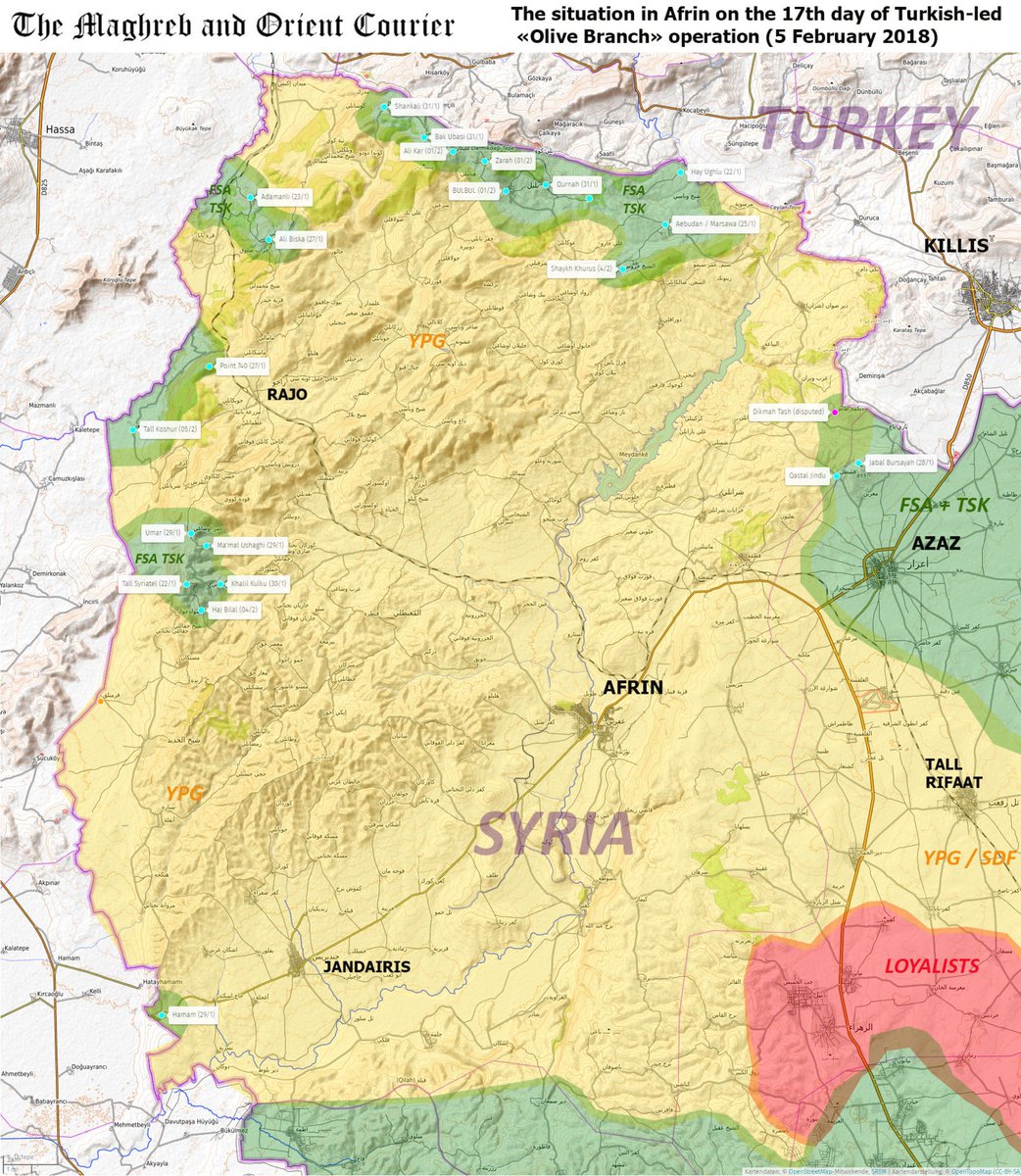
Regardless, Turkey’s incursion – referred to as “Operation Olive Branch” – is creating precisely the zone of control described by US policymakers in 2012 with precisely the same US-armed and funded militant groups described in US policy papers meant to occupy the “safe haven.”
Having tried and failed to maneuver geopolitically to establish the “safe haven” over the past 6 years – including through the citing of “humanitarian crises” and false flag attacks on Turkish territory – the US and Turkey have finally created a sufficiently chaotic intersection of mission creep, proxy groups, and opposing interests to justify the invasion. Turkey had been incrementally invading and occupying Syrian territory while bolstering an army of militants drawn from designated terrorist organizations including Al Qaeda for years in preparation for this recent invasion.
While the Western media and Turkey itself maintains that Operation Olive Branch is aimed at the Kurds, the creation of Washington’s “safe haven” intentionally filled with extremist militants who have fought Syrian troops for years is aimed ultimately at Damascus.
Regardless of this fact, the Kurds will undoubtedly be either liquidated or displaced by Turkey, with the US and its European allies putting up only token resistance as the exploitation and betrayal of the Kurds finally runs its full course.
Northern “Safe Haven” Was US Policy Since 2012
In a March 2012 document published by corporate-financier funded Brookings Institution titled, “
Saving Syria: Assessing Options for Regime Change ” (PDF) it is stated specifically that (emphasis added):
“An alternative is for diplomatic efforts to focus first on how to end the violence and how to gain humanitarian access, as is being done under Annan’s leadership. This may lead to the creation of safe-havens and humanitarian corridors, which would have to be backed by limited military power. This would, of course, fall short of U.S. goals for Syria and could preserve Asad in power. From that starting point, however, it is possible that a broad coalition with the appropriate international mandate could add further coercive action to its efforts.”
In 2012, Brookings and other US policy circles repeatedly attempted to sell the creation of safe havens in Syria under a humanitarian pretext. This continued for several years until it became abundantly clear that most displaced Syrians lived within Syrian government-controlled territory.
Brookings continued by describing how Turkey’s aligning of vast amounts of weapons and troops along its border with Syria in coordination with Israeli efforts in the south of Syria, could help effect violent regime change in Syria (emphasis added):
In addition, Israel’s intelligence services have a strong knowledge of Syria, as well as assets within the Syrian regime that could be used to subvert the regime’s power base and press for Asad’s removal. Israel could posture forces on or near the Golan Heights and, in so doing, might divert regime forces from suppressing the opposition. This posture may conjure fears in the Asad regime of a multi-front war, particularly if Turkey is willing to do the same on its border and if the Syrian opposition is being fed a steady diet of arms and training. Such a mobilization could perhaps persuade Syria’s military leadership to oust Asad in order to preserve itself. Advocates argue this additional pressure could tip the balance against Asad inside Syria, if other forces were aligned properly.
Again, the policy paper published in 2012 was continuously put into effect since, with Israel and Turkey continuously putting pressure on Syria up to and including today with Turkey’s incremental invasion in the north and Israel’s serial attacks around Damascus and the Golan Heights in the south.
While the manufactured pretext for creating the US-designed “safe haven” has changed, the goal is still the same – the overthrow of the Syrian government, and falling short of that, the permanent division and thus destruction of Syria as a unified nation state.
US Using Turks to Liquidate Uncooperative Kurds
Brookings today provides insight into how this latest iteration of Washington’s “safe haven” plan is being sold to the public. In a January 26, 2018 article titled, “
What’s next for Turkey, the US, and the YPG after the Afrin operation?,” Brookings visiting fellow Ranj Alaaldin claimed:
Turkey fears that an emboldened Syrian Kurdistan and the predominance of the YPG—the armed wing of the Democratic Union Party (PYD), which has gone from strength to strength in recent years—would fuel its own restive Kurdish population and, therefore, strengthen the PKK’s insurgency. Ankara blames Washington’s relationship with the YPG and its policies in Syria for the current crisis, but it is in fact a story of missed opportunities and miscalculations on the parts of Turkey, the YPG, and the United States.
And while the piece and others like it circulating in the Western media attempt to frame the pretext for the recent operation as a growing diplomatic row between Turkey, the US, and Washington’s Kurdish allies, the article makes a revealing concession:
…the Arab opposition pushed the Kurdish opposition into tacit cooperation with the Assad regime to guarantee its own survival, despite the regime’s record for systematically repressing Syria’s Kurds.
Indeed, the Kurds west of the Euphrates River have avoided clashes with Syrian government forces for years and as the Syrian conflict draws to a close, would likely have cut deals with Damascus as territory they occupied was rolled back into a unified Syrian state – effectively and finally foiling US plans for Syria.
Turkey’s latest incursion aims to prevent this.
Replacing Kurds with More Cooperative Terrorists
Not only will Kurds west of the Euphrates be either pushed out or eliminated, they will be replaced by extremists armed and backed by the US, NATO, and the Gulf Cooperation Council (GCC) who will undoubtedly and eagerly continue fighting Syrian government forces.
The Al-Monitor in an article titled, “
Erdogan’s plans for Afrin might not sit well with Syria,” would report:
As casualties rise on both sides in Turkey’s offensive in Syria, Ankara is pursuing a plan that goes beyond putting an end to the domination of the Kurdish People’s Protection Units (YPG). President Recep Tayyip Erdogan incessantly refers to a project to settle “the real owners of the area” in Afrin province.
He has two groups in mind: the band of militias that the Turkish Armed Forces (TSK) employs in the field called the Free Syrian Army (FSA), and the crush of Syrian refugees in Turkey.
The so-called “Free Syrian Army” is little more than a conglomeration of terrorist organizations fighting either directly under the banner of Al Qaeda or under one of its many affiliates.
It is also the primary proxy the United States and its regional allies including Turkey have been using to wage war against Syria and its Iranian, Lebanese, and Russian allies for years. They are the only group in Syria remaining with any will to continue fighting Syrian forces and their allies and their proximity to the Turkish border allows them to be easily replenished, and harbored within Turkish territory when necessary.
With a much larger and deeper “safe haven” established inside Syrian territory, occupied by Turkish forces and accompanying air defense capabilities, the front these terrorists are fighting on will move that much closer to Damascus.
More at:
https://www.globalresearch.ca/turke...ought-us-safe-haven-in-northern-syria/5628249


 )
)