Dragon court

Or maybe nobody's really in control at any level, and the best our authorities can manage is projecting power... Maybe the greatest trick the powers that be ever pulled, was convincing the world they had control.
They do fight among themselves and it can be chaotic during "interesting times", but they are more in control than anyone else.
 
Or maybe nobody's really in control at any level, and the best our authorities can manage is projecting power... Maybe the greatest trick the powers that be ever pulled, was convincing the world they had control.

This is closer to the truth than anything else in this thread.
 
Order of the Garter

Why is it so hard to find good information on the Order of the Dragon?
I found out that Bram Stoker’s Count Dracula is based on Vlad the Impaler, and that the British Royal family are direct descendants of Vlad. Vlad the Impaler was a member of the Order of the Dragon.
Then I have searched for information, and by far the “best” source for information I found on this topic is the Nicholas de Vere book. De Vere’s book is flawed, mainly because he was subjective.
One of the reasons I think this topic is very important is that I couldn’t find better information...

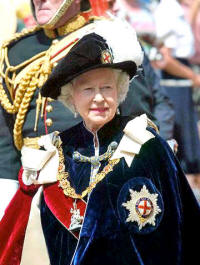
This post is about the Order of the Garter, an ancient society that these days is chaired by Queen Elizabeth II. See Queen Elizabeth in Garter Robes.
garter03_02_small.jpg


According to Nicholas de Vere...
The Order of the Garter was founded by Edward III. Then in 1397 (other sources say 1408), the Dragon Court was reinstated by King Sigismund of Luxembourg, both orders used the ourobourus as their emblem. The ourobourus, the reptilian symbol of completeness is the Sumaire, the serpent that encircles and spirals to create an inhaling vortex.
See the engraving by Lucas Jennis of an ourobourus.
220px-Ouroboros_1.jpg


See the Order of the Dragon symbol from the 15[SUP]th[/SUP] century Jankovich Saddle, on display in Budapest, Hungary.
03+-+HNM+Jankovich+Z3.jpg


The Most Noble Order of the Garter was founded by Edward III around 1348, according to the “independent” Wikipedia admission into which is currently ranked as the third most prestigious honour in the UK (inferior only to the Victoria Cross and George Cross).
Since the Order of the Garter is the UK's senior order, a member will wear its star above that of other orders. It is worn on the left breast. See the eight-pointed silver badge star, introduced by Charles I, in its centre is the cross of St George, surrounded by the blue Garter.
01-Garter-RC.jpg


See Prince William, son of Crown Prince Charles with his blue Garter Riband and Star,
100px-William_in_uniform.jpg


Henry V was King of England from 1413 until his death in 1422. In 1416, Sigismund, then King of Hungary and later Holy Roman Emperor, visited Henry to keep the peace between England and Hungary. Henry enrolled him in the Order of the Garter, and Sigismund inducted Henry into the Order of the Dragon.

Membership of the Order of the Garter is limited to the Sovereign, the Prince of Wales and a maximum of 24 companion members, and supernumerary members. The monarch - Sovereign of the Garter - grants membership, and the Prince of Wales is known as a Royal Knight Companion of the Garter.
Traditionally the European monarchs join the Order, but the Belgian Royal family is not so high in the hierarchy. Both Prince Albert II, and his successor King Philippe have never been admitted. For a time, both Princess Juliana and Princess Beatrix of the Netherlands were concurrent members of the Order of the Garter as Stranger Ladies of the Garter.
The Sovereign may "degrade" members who have committed serious crimes, like treason.
Firestarter said:
As King Arthur's Dragon Court originally consisted of 24 knights, there are currently 24 families representing the Rex Deus group and Dragon Court. These are supposedly descendants of Israel's 24 (priestly) Levite families.
The Dragon Court exists to protect the descendants of the Vere family, out of which eventually the Antichrist will come.
The Druidic Council of Elders is represented by the Dragon Court, which consists of 26 members (26 = 2*13) of royalty from Eurasian countries in the European Council of Princes. These 26 are 24 elders plus the Antichrist and False Prophet.
At the founding of the Order of the Garter, 26 "poor knights" were appointed to the Order and its chapel. This number was not always maintained. After the knights objected to the term "poor", in the 19th century King William IV renamed them as Military Knights of Windsor.
The Chapel of the Order is St. George's Chapel, Windsor, located in the Lower Ward of Windsor Castle, founded in 1475: https://en.wikipedia.org/wiki/Order_of_the_Garter

See the coat of arms of Queen Elizabeth I (1558-1603) with the red and gold dragon on the right, 2 crowned lions. Notice the “blue belt” wrapped around the centre; the symbol for the Order of the Garter.
200px-Coat_of_Arms_of_England_%281558-1603%29.svg.png
 
Last edited:
I looked into DeVere, and he's an obvious fraud. Claims like the 'holocaust of elves', magic DNA... he's just a petty scam artist like Anton LaVey, so don't be taken in. There are all sorts of liars serving red herring to curious people out of sheer sport and contempt for the truth.
 
Scythians

The son of Anton LaVey claimed he was castrated by his daddy. The founder of the Temple of Set, Michael Aquino who was involved in the ritual abuse of children in the “Franklin scandal”, started in LaVey’s cult...

It’s easy to label Nicholas de Vere as a fraud...
De Vere used a number of (strange) names to describe “dragons”, among them “elves”. If I understand correctly the “elven Holocaust” was another name for the crusade against the Cathars and the burning of witches. According to De Vere this started in the year 751, and was ended “in England at least” in 1736...
See the following quotes from De Vere’s book:
Lastly we learn that from 751 AD the true Dark Age began in earnest and the Elven Holocaust was initiated and would run its course for another thousand years until, in England at least, the witchcraft laws were repealed in 1736. North of the border in Scotland, however, the persecution of witches in the 1700’s was at its fiercest until the end of the century.
(…)
One could not and cannot ’become’ a member of the gentry any more than one can ’become’, by initiation or otherwise, a ’witch’, a ’vampire’, a ’magus’, a ’dragon’, a ’fairy’ or an ’elf’.
All these are names which described the ’gentry’ and the latter - elf - is a word which originates from albi meaning a white or ’shining one’. From albi derives the French Cathar name Albigensian (Albi + Gens) meaning - ’of the elven blood’ - et quid erat demonstrandum.


I found an interesting, but overlong Wikipedia page on the Scythians. My main problem is that it’s filled with contradictions.
On the one hand Wikipedia claims that the Scythians were a large group of nomads that were blue- (or green-) eyed, fair-skinned and light-haired, originally from Iran.
On the other hand Wikipedia writes that the term Scythian, like Cimmerian, referred to a variety of groups from the Black Sea to southern Siberia and central Asia - a variety of peoples. In this version, Scythians were nomads that lived in the steppes of which the west was near the Black Sea and in the east went all the way to Mongolia, the north of China (2,500 miles from east to west and between 200 and 600 miles from north to south). This would explain why dragons are so important in Chinese culture.
This version might explain why De Vere would use a whole bunch of names to describe the “dragons”, which could refer to different types of people within the Scythians (dragons).
This would indicate that the area that I found as “Scythia” was only the west part of the area where the dragons (Scythians) lived.
4445-004-B28F8D1A.jpg


The Scythians first appeared in the historical record in the 8th century BC; Heroditus reported 3 versions of the origins of the Scythians. Ancient Greek historians wrote about Scythians who lived north of the Black Sea and the Caucasus Mountains.
In the 7th century BC the Scythians with the Cimmerians frequently raided the Middle East.
Wikipedia dates the Scythians from about the 9th century until the 1st century BC, but doesn’t make clear what happened after that.
The classical Scythians may have disappeared by the 1st century BC, but Eastern Romans continued to speak of "Scythians" for Germanic tribes or mounted Eurasian nomadic barbarians.

There are results of aDNA calculators that confirm a link between the Iranic speaking people of South-Central Asia, the people of the northern regions of West Asia and Eastern Europeans.
The western Scythians were ruled by a wealthy class known as the Royal Scyths. The Scythians controlled a vast trade network connecting Greece, Persia, India and China.
Iron Age Scythians were a mix of Yamnaya people from the Russian Steppe and East Asian populations, similar to the Han and the Nganasan (from northern Siberia).
The Scythians used cannabis to induce trance and divination.

From large burial mounds (up to 20 metres high) we have learned about Scythian life and art. Scythian tombs reveal traces of Greek, Chinese, and Indian craftsmanship. These burial mounds were named kurhán or kurgán, from the Turkic word for "castle” (which indicates a Turkish origin…).
In 1968, the Tillia Tepe was uncovered in northern Afghanistan. This included the following gold head wear, with dragons (dated around the 1st century BC).
afgh05-207-08.jpg


The greater part of the west Scythians are called Daae, but those who are situated more to the east are named Massagetae and Sacae.
The Scythians were warriors (instead of farmers). They "fought to live and lived to fight, and drank the blood of their enemies and used the scalps as napkins”: https://en.wikipedia.org/wiki/Scythians
See the knive sheath with swastikas…
260px-TillyaTepeSheath2.jpg


Here’s a PDF on the study of ancient nomadic cultures in Eurasia (2002): http://www.geochronometria.pl/pdf/geo_21/geo21_17.pdf
This research is focused on the chronological investigations of ancient nomads belonging to the Scythian cultures which occupied the steppe and forest-steppe zones of Eurasia during the 9th-3rd centuries BC.
(…)
The tribes are traditionally connected with the Scythian cultures which have different names in different regions of Eurasia: the Scythians in Europe, the Suoromathian in the Lower Volga River Basin and Southern Ural regions, the Tasmola in the Transural regions and the different mosaic cultures in Altai, Southern Ural and Central Asia.
(…)
The Lower Volga nomads have close relations with European Scythians to the West. They also have many similarities with the nomads of the Aral Sea region, Kazakhstan and Southern Siberia to the East. Now we present the first 14C dates for the monuments in these regions (Table 1).
(…)
Since the 9th-8th centuries BC the Scythian cultures began to appear on the wide territory of the steppe and forest-steppe zones of Eurasia. Now there are some monuments, which, according to the radiocarbon dates, can be demonstrated to be synchronous to the Arzhan royal barrow. The ages of monuments located in the Lower Volga River basin, the Urals and Transurals regions are more synchronous to the Pazyryk group barrows.


The Wikipedia page on the Scythians also references an article that seems to confirm that Ashkenazi “Jews” originate from Turkey, and are descendants from the Scythians.
According to geneticist Eran Elhaik, the word Ashkenaz comes from the ancient Assyrian and Babylonian name for the Scythians - Ashguza. He places the original homeland of the Ashkenazi Jews in north-east Turkey and a region to the north of the Black sea.
The genetic modelling was based on DNA from 367 Jews of northern and eastern European origin and over 600 non-Jewish people mainly from Europe and western Asia.

Three still-surviving Turkish villages – Iskenaz, Eskenaz and Ashanaz – were part of the original Ashkenazic homeland.
Over 90% of the ancestors of Ashkenazi Jews are Greeks, Iranians and others who colonised what is now northern Turkey more than 2000 years ago and were converted to Judaism. Around the first few centuries AD, the Persian Empire was home to the world’s largest Jewish communities.

From the 690s AD onwards, because of anti-Jewish persecution by the Christian Byzantine Empire, large numbers of Jews fled across the Black Sea to a more friendly state – the Turkic-ruled Khazar Empire with its large Slav and other populations.
When the Khazar Empire declined in or around the 11th century, some of the Jewish population migrated west into Central Europe: http://www.independent.co.uk/news/s...istorys-forgotten-turkish-roots-a6992076.html

In the Tenach (Old Testament) and the New Testament, Scythians are mentioned 3 times.

2 Maccabees 4:47
Insomuch that he discharged Menelaus from the accusations, who notwithstanding was cause of all the mischief: and those poor men, who, if they had told their cause, yea, before the Scythians, should have been judged innocent, them he condemned to death.

3 Maccabees 7:5
These friends also drove them along in chains, treating them harshly as slaves, or rather, as traitors. Without any investigation or trial they attempted to destroy them, displaying a cruelty more savage than the barbarians from Scythia.

Colossians 3:11

Where there is neither Greek nor Jew, circumcision nor uncircumcision, Barbarian, Scythian, bond nor free: but Christ is all, and in all.
 
Last edited:
I’ve found an article with 10 interesting facts about Scythians.
Scythians wore tattoos as a sign of their nobility. These days it’s very “hip” to get a “cool” tattoo (in imitation of the Dragons?).
A strange tale is that when the Scythian warriors faced an army of Amazon women, they defeated them not by fighting, but by seducing them (with their irresistible charm?): http://listverse.com/2010/01/05/top-10-interesting-facts-about-the-scythians/


The Greek historian Herodotus (480 - 430 BC) is one of the earliest written sources on the Scythians: https://www.metmuseum.org/pubs/bulletins/1/pdf/3269235.pdf.bannered.pdf
64. In what concerns war, their customs are the following. The Scythian soldier drinks the blood of the first man he overthrows in battle. Whatever number he slays, he cuts off all their heads, and carries them to the king; he forfeits all claim if he does not produce a head. In order to strip the skull of its covering, he makes a cut round the head above the ears, and, laying hold of the scalp, shakes the skull out; then with the rib of an ox he scrapes the scalp clean of flesh, and softening it by rubbing between the hands, uses it thenceforth as a napkin. The Scyth is proud of these scalps, and hangs them from his bridle-rein; the greater the number of such napkins that a man can show, the more highly is he esteemed among them. Many make themselves cloaks, like the sheepskins of our peasants, by sewing a quantity of these scalps together. Others flay the right arms of their dead enemies, and make of the skin, which is stripped off with the nails hanging to it, a covering for their quivers. Now the skin of a man is thick and glossy, and would in whiteness surpass almost all other hides. Some even flay the entire body of their enemy, and, stretching it upon a frame, carry it about with them wherever they ride. Such are the Scythian customs with respect to scalps and skins.
65. The skulls of their enemies, not indeed of all, but of those whom they most detest, they treat as follows. Having sawn off the portion below the eyebrows, and cleaned out the inside, they cover the outside with leather. When a man is poor, this is all that he does; but if he is rich, he also lines the inside with gold: in either case the skull is used as a drinking cup. They do the same with the skulls of their own kith and kin if they have been at feud with them, and have vanquished them in the presence of the king. When strangers whom they deem of any account come to visit them, these skulls are handed round, and the host tells how that these were his relations who made war upon him, and how that he got the better of them; all this being looked upon as proof of bravery.
(…)
70. Oaths among the Scyths are accompanied with the following ceremonies: a large earthen bowl is filled with wine, and the parties to the oath, wounding themselves slightly with a knife or an awl, drop some of their blood into the wine; then they plunge into the mixture a scimitar, some arrows, a battle-axe, and a javelin, all the while repeating prayers; lastly the two contracting parties drink each a draught from the bowl, as do also the chief men among their followers.
(…)
106. The manners of the Man-eaters are more savage than those of any other race. They neither observe justice, nor are governed by any laws. They are nomads, and their dress is Scythian; but the language which they speak is peculiar to themselves. Unlike any other nation in these parts, they are cannibals.


In the St. George chapel, home to the Order of the Garter, the sword, helm, crest, crown, heraldic banner and coat of arms for each member is displayed.
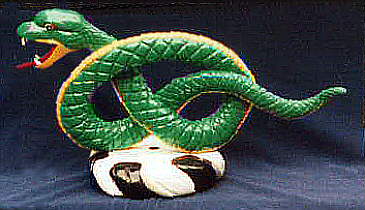
See the crest of a green snake (dragon) of the Duke of Devonshire (Andrew Cavendish).
SNAKE2.JPG


On the roof of St. George chapel, 76 statues representing the 14 heraldic Queen’s beasts are shown, including the lion and dragon.
Also in Hampton Court Palace, the Royal beasts are shown, see the Red dragon of Wales.
Dragon-close-sml.jpg


In Oxford (home of the legendary University), there is a Dragon School: https://www.dragonschool.org/the-school/welcome.html
 
Cadmus and Warmians

I’ve found 2 good (mythological) stories on dragons on the Gnosticwarrior.com site – Cadmus and Warmians.

Cadmus
Cadmus consulted an oracle in Delphi, which ordered him to give up his quest and follow a special cow, with a half moon on her flank, and build a town on the spot where she would lie down exhausted.
At the moment that Cadmus intended to sacrifice the cow to Athena, some of his companions were slain by the spring's guardian water-dragon at the nearby Ismenian spring. Cadmus in turn killed the dragon.
Athena then told him to sow the dragon’s teeth in the ground, from which sprang a race of fierce armed men, called the Spartoi (sown). Cadmus threw stone among them, which caused them to fight one another. When only 5 of them were still alive Cadmus told them to stop fighting. These 5 assisted him to build the Cadmeia or citadel of Thebes, and became the founders of the noblest families of that city.
See Cadmus and the dragon, on an amphora from Euboea at the Louvre (ca. 560–50 BC).
280px-Kadmos_dragon_Louvre_E707.jpg


Cadmus was deeply troubled over killing the sacred dragon, and one day remarked that if the gods were so enamoured of the life of a serpent, he might as well wish that life for himself. Immediately he began to grow scales and change in form. His wife, Harmonia, thereupon begged the gods to share her husband's fate, which they granted.
In another version of this story, the bodies of Cadmus and his wife were changed after their deaths. In Euripides’ The Bacchae, Cadmus is given a prophecy by Dionysus that both he and his wife will be turned into snakes for a period before eventually being brought to live among the blest: https://en.wikipedia.org/wiki/Cadmus


Warmians
In Old Prussia (these days called Poland) in the 14[SUP]th[/SUP] century, there was a mythical dragon king named Warmo who ruled over the Warmians (or Warmi) that lived in Warmia. Warmians translates worm people, a big worm looks like a snake, so one could translate “Warmians” with “serpents” or “dragons”.
According to legend, there once live a dragon there that devoured women, children and animals. Many knights died trying to defeat the dragon, until one knight finally succeeded.
The Warmian tribe was conquered by the Catholic crusaders of “The Order of Brothers of the German House of Saint Mary” in Jerusalem. These were Teutonic knights under the command of the Pope, who converted the Warmians to Christianity: https://gnosticwarrior.com/the-dragon-tribe-of-old-prussia.html

Orneta (in German: Wormditt) was the small town in northern Poland, in the Warmian Masurian Voivodeship where, according to legend, lived the dragon that devoured animals, women and children.
Wormditt, was first mentioned in 1308: https://en.wikipedia.org/wiki/Orneta

Orneta's coat of arms depicts the worm (English: worm or dragon). The oldest image of Orneta's crest is from the sealing wax on a document from 1388.
It represents the dragon biting its own tail.
Wormditt.hagd.jpg
 
Firestarter said:
De Vere wrote a book about the Order of the dragon: From Transylvania to Tunbridge Wells – The dragon legacy. It shows beyond any doubt that this is still an active society: http://www.bibliotecapleyades.net/dragons/esp_sociopol_dragoncourt02.htm
The Order of the dragon appears to be some Order for people enjoying themselves dressing up, and endulging themselves in Satanic rituals...
I’ve found a longer version of De Vere’s book (13.4 MB); Nicholas de Vere – The Dragon legacy (2004): http://sirius-star.ro/wp-content/up...-of-an-Ancient-Bloodline-Nicholas-de-Vere.pdf

I couldn’t motivate myself to really read this book (although I have ordered the book, in paper form), as I had already read the earlier, shorter draft of his book. It’s not a “text” document, but images of the pages, which makes reading less easy (in my opinion) and certainly makes it more time-consuming to summarise.
There isn’t a single reference in the whole book...

One of the interesting (bizarre) claims by Nicholas de Vere, for example on pages 224-227 and 365-368, is that the tale of Robin Hood was based on the real “Robin Hood or Robert Hod”; in “Hinduism he is also the Lord of the Forest as Vishnu”?!?
When I read this at first, I thought that this is ridiculous, but after further deliberation I think this isn’t as farfetched as it looks. If I understand correctly, Nicholas de Vere even claimed to descend from Robin Hood...

There aren’t many pictures in the De Vere book.
On pages 126-129 are some pictures with an explanation on amongst others the swastika, hexagram and Skull & Bones symbols.
According to De Vere, the hexagram (Star of David) is really another form of the swastika. While the hexagram also represents Skull & Bones (“male” Skull, and “female” Bones).
bb4437909284864e26934d34317cb3d3709ebf98.png


The word swastika comes from the Sanskrit word svastika. It wasn’t only a symbol in Hinduism, India but was also used in other parts of the world.
5575542_orig.jpg


Here’s an early image of the ouroboros, from the 11 century BC, Egypt.
18e3bb7775847d41db67eeec87eaf3b1.jpg
 
Last edited:
Merovingian, Carolingian, Davidian

I think that I’ve finally found the bottom line of what these “illuminati bloodlines” are about...

Three bloodlines are the most important: Merovingian, Carolingian, and Davidic of the tribe of Judah (Plantagenet is another bloodline that could be worth investigating).
These 3 bloodlines all descend from the Khazars, Scythians, Ashkenazis. Only the Davidians, who claim to descend from King David from the Tenach (Old Testament), say they’re Jews. That they descend from David is just as preposterous as the Merovingian claim to descend from Jesus Christ (according to the New Testament, Jesus Christ belonged to the tribe of Judah). The lion is the heraldic symbol of the Davidic bloodline. The Rockefellers claim to descend from David...
There is also a line to the Armenians. Through the Armenian Jews the double-headed eagle of the Mamikonians became the heraldic symbol of the Khazars.

Meroveus is the founding father of the Merovingian bloodline.
In 754, Pope Zachary's successor, Pope Stephen II, crowned Pepin the Short (Pepin III) in the place of Childeric III. The Merovingians weren´t on good terms with the Vatican...
Carolus (a.k.a. Charles or Karl) Martel (686 - 741) founded the Carolingian Empire, named after him.

For the short explanation of what this means, see the following picture.
In this picture Rabbi Makhir of the Davidic bloodline, is called Theuderic IV, who married the daughter of King Charles Martel, Princess Alda, a.k.a. Aldana, a.k.a. Aida, a.k.a. Aude of Toulouse.
Makhir and Alda (715-804) were the parents of Guillaume de Toulouse de Gellone (a.k.a. William of Orange) and Ida Redburga, who married Egbert of Wessex, later King of England (not in this picture). All the leading European aristocratic families are Carolingians. There were some marriages with the Merovingians.
6722171.jpg


Nicholas de Vere called the elite of the Scythians: dragons, vampires, witches, and the grail bloodline (which according to De Vere mean the same)...
The Merovingians were originally known as the Sicambrians. It is believed that the Merovingians descended from the Tribe of Benjamin, who had entered Greece as Cadmus and Danaaus (Tribe of Dan).
According to Eldad ha-Dani, a Jewish traveller of the ninth century, and also the Cochin Scroll, the Khazars were remnants of Simeon and Manasseh. According to a letter of King Joseph, the Khazars descend from the Tribe of Simeon, who had been assimilated into the Edomites.
In the following picture, the red arrows show the Scythians’ migration to Europe from 721 BC. I doubt the green arrows, as I think that the Scythians were really Turks...
9693059.jpg


The Kingdom of the Franks is where the Carolingian bloodline originated (although one could say that they had parents...). At one time this consisted of what is now called France, Belgium, Netherlands, Luxembourg, Germany, Denmark, Switzerland, Austria, half of Italy, and a small part of North Spain.
8925314_orig.jpg


Rabbi Makhir (720-803), a.k.a. Theuderic IV, a.k.a. Natronai al-Makir Judiarch of Narbonne, a.k.a. Makhir of the Caliph, was a “Jewish” Exilarch from Baghdad (maybe he was an Ashkenazi “Turk”), who brought with him the teachings of the Kaballah. Makhir came to France probably at the request of Charles Martel, who named him King of the Jews...
Rabbi Makhir ruled over an area called Septimania (a.k.a. Languedoc), in the South of France, his descendants and followers, were known as Cathars...
Dagobert's son, Sigisbert, was an ancestor of Guillaume de Gellone (755-812). De Gellone followed his father Makhir as the ruler of Septimania. He was followed by Godfroi de Bouillon, who captured Jerusalem during the Crusades.
Charlemagne, grandson of Martel, together with the husband of Alda, Rabbi Makhir, founded the Holy Roman Empire (founded by “Jews”...).
https://herebedragons.weebly.com/davidic.html
https://herebedragons.weebly.com/merovingian-origins.html (archived here: http://archive.is/G69W9)
 
Last edited:
The current day Rothschild coat of arms shows the black phoenix twice, twice the 5 arrows, a white unicorn, gold lion, red beast, a pentagram, and the motto Concordia, Integritas, Industria.
01%2Brothschild%2Bfamily.png

It is interesting to note the forward-facing helms, indicating royalty. This is no happenstance occurrence.

For example, one of my two inherited arms (grandma and grandpa were count and countess) has such a helm, but cocked to one side, indicating that the family is high nobility but not royal-high. Back in the day, to incorporate such an element without authority would be to make a claim to which one is not entitled, which would likely result in forfeit of whatever titles one might otherwise hold. So far as I am aware, no noble would have dared such a thing.

So then either the Rothschilds are just putting on airs with window dressing in an age where such titles and heir symbols mean nothing, legally and lawfully speaking, or the message is clear and unmistakable and the bearer of something of real force and power. I somehow doubt the former case carries the real weight. People in such positions have no need for auto-stroking of their egos. Indeed, if they are nominally intelligent and smart, they shun the attention because they know exactly who they are.
 
Armenian serpent, Tribe of Dan

Most people don't even realise that all of the symbols in these heraldic signs, mean something...

Firestarter said:
There is also a line to the Armenians. Through the Armenian Jews the double-headed eagle of the Mamikonians became the heraldic symbol of the Khazars.
The “independent” Wikipedia for some reason doesn’t have information about the Double-headed eagle being a heraldic symbol for Armenian Jews, which was adopted by the Khazar elite: https://en.wikipedia.org/wiki/Double-headed_eagle

But Wikipedia (in 2009) did have some interesting information on Double-headed eagles. Not only in connection to Armenian Jews, but also Masonry…
Double-headed eagles have been present in imagery for many centuries. The two-headed eagle can be found in archaeological remains of the Hittite civilization dating from a period that ranges from the 20th century BC to the 13th century BC.

Cylindric seals discovered in Bogazkoy, an old Hittite capital in modern-day Turkey, represent clearly a two-headed eagle with spread wings. The aesthetics of this symmetrical position explains in part the birth of this religious figure. It probably dates from the 18th century BC, and was used in a tradesman background. It can also be seen in the same region in two monumental settings: in Alacahöyük around 1400 BC and in Yazilikaya before 1250 BC. Here the context looks different and totally religious: the eagle becomes a divinity symbol. The two-headed eagle slowly disappears during the last Hittite period, from the 9th century BC to the 7th century BC, and totally disappears after the end of the empire.

The double-headed eagle was also in use by the Arsacid Dynasty of Armenia and the Mamikonian family[1] in the 3rd to 9th centuries.
(…)

The Double-Headed Eagle of Lagash is used as emblem by the Scottish Rite of Freemasonry[4].
https://web.archive.org/web/20090213184612/https://en.wikipedia.org/wiki/Double-headed_eagle


Ancient Armenians worshipped the Snake (Lord) Hay.
Snakes were on doors, pillars and furniture. Women wore ornaments in the form of a snake.
Odz – in Armenian snake – appears in geographical names like Odzun, Odzaberd (snake fortress), Odzi get (Snake river) and Odzi Kaghak (Snake town): https://narinnamkn.wordpress.com/2014/10/14/snake-is-the-totem-of-the-armenians/
(archived here: http://archive.is/bJg1y)
10610629_757593077646107_2744546783383165210_n.jpg


The Tribe of Dan was a seafaring tribe and one of the 12 (or 13) tribes of Israel. Their banner displayed the symbol of a serpent. See Dan tribe's plate on the Heichal Shlomo’s door in Jerusalem.
[FONT=&quot]
Dan_tribe_plate_Heichal_Shlomo_door_Jerusalem.jpg
[/FONT]


The Tribe of Dan is NOT the same as the Tuatha de Danann.
Dan and Naphtali, 2 patriarchs of the 12 Tribes of Israel, were the sons of Jacob by the handmaiden Bilhah.
Tuatha de Danann translates the people of the goddess Danu and they supposedly descended from Nemed, whose father was Agnoman king of Scythia.
Danaus was the son of the Egyptian king Belus (a.k.a. Bela) and the cousin of Cadmus and Phoenix. According to legend, Cadmus travelled from Egypt to first Phoenicia and then to Greece where he slayed the Ares dragon and founded Thebes. Phoenicia was named after his brother Phoenix: http://redqueenwhitequeen.com/articles/The Tribe of Dan.shtml
(archived here: http://archive.is/WdPEM)
 
Last edited:
Most people don't even realise that all of the symbols in these heraldic signs, mean something...

The “independent” Wikipedia for some reason doesn’t have information about the Double-headed eagle being a heraldic symbol for Armenian Jews, which was adopted by the Khazar elite: https://en.wikipedia.org/wiki/Double-headed_eagle

But Wikipedia (in 2009) did have some interesting information on Double-headed eagles. Not only in connection to Armenian Jews, but also Masonry… https://web.archive.org/web/20090213184612/https://en.wikipedia.org/wiki/Double-headed_eagle


Ancient Armenians worshipped the Snake (Lord) Hay.
Snakes were on doors, pillars and furniture. Women wore ornaments in the form of a snake.
Odz – in Armenian snake – appears in geographical names like Odzun, Odzaberd (snake fortress), Odzi get (Snake river) and Odzi Kaghak (Snake town): https://narinnamkn.wordpress.com/2014/10/14/snake-is-the-totem-of-the-armenians/
(archived here: http://archive.is/bJg1y)
10610629_757593077646107_2744546783383165210_n.jpg


The Tribe of Dan was a seafaring tribe and one of the 12 (or 13) tribes of Israel. Their banner displayed the symbol of a serpent. See Dan tribe's plate on the Heichal Shlomo’s door in Jerusalem.
450px-Dan_tribe_plate_Heichal_Shlomo_door_Jerusalem.jpg


The Tribe of Dan is NOT the same as the Tuatha de Danann.
Dan and Naphtali, 2 patriarchs of the 12 Tribes of Israel, were the sons of Jacob by the handmaiden Bilhah.
Tuatha de Danann translates the people of the goddess Danu and they supposedly descended from Nemed, whose father was Agnoman king of Scythia.
Danaus was the son of the Egyptian king Belus (a.k.a. Bela) and the cousin of Cadmus and Phoenix. According to legend, Cadmus travelled from Egypt to first Phoenicia and then to Greece where he slayed the Ares dragon and founded Thebes. Phoenicia was named after his brother Phoenix: http://redqueenwhitequeen.com/articles/The Tribe of Dan.shtml
(archived here: http://archive.is/WdPEM)

The snake is actually the symbol of Jesus but has been greatly misunderstood because of the garden story. The reason Eve was fooled by Satan, in the first place, was because of this.

The staff, that Moses held high for healing, was a snake. Most indigenous people understood much more about the symbolism of the sacred snake than in today's world.
 
According to the New Testament Jesus Christ was of the Tribe of Judah.
The Merovingians even claim to descend from Jesus, who supposedly married Mary Magdelene, went to the South of France, and had children...

The snake is actually the symbol of Jesus but has been greatly misunderstood because of the garden story. The reason Eve was fooled by Satan, in the first place, was because of this.
If you have a source that confirms that the serpent was a symbol associated with Jesus, can you post it?
 
I’ve been searching for more information on the ancestry of Guillaume de Gellone and his father…
According to the state media, Theoderic IV (father of De Gellone) is NOT the same as Rabbi Makhir.

The strange thing is that Wikipedia doesn’t list any parents for Theoderic IV: https://en.wikipedia.org/wiki/Thierry_IV
On the other hand it is common belief that the son of Theoderic IV, Saint Guillaume de Gellone, is a legendary “hero” figure...
How could a simple Theoderic IV, without “Royal blood”, marry the daughter of the legendary King Carolus “Charles” Martel?

On the other hand, Wikipedia lists a relatively large amount of information on the Jewish Exilarch Rabbi Makhir that came to France at the request of Carolus Martel.
Both Makhir of Narbonne and Theoderic IV were reportedly born in the year 720, and according to the “independent” Wikipedia both married a daughter of Carolus Martel: Makhir-Alda; Theoderic-Auda.
While there is no ancestry for Theoderic IV, there are no children listed for Makhir-Alda…

Abraham ibn Daud wrote in about 1161, about King Charles’ (Carolus Martel) request to send a descendant from the House of David:
Then King Charles sent to the King of Baghdad [Caliph] requesting that he dispatch one of his Jews of the seed of royalty of the House of David. He hearkened and sent him one from there, a magnate and sage, Rabbi Makhir by name. And [Charles] settled him in Narbonne, the capital city, and planted him there, and gave him a great possession there at the time he captured it from the Ishmaelites [Arabs].
And he [Makhir] took to wife a woman from among the magnates of the town; *...* and the King made him a nobleman and designed, out of love for [Makhir], good statutes for the benefit of all the Jews dwelling in the city, as is written and sealed in a Latin charter; and the seal of the King therein [bears] his name Carolus; and it is in their possession at the present time.
The Prince Makhir became chieftain there. He and his descendants were close [inter-related] with the King and all his descendants.

The Makhir family enjoyed many privileges for centuries and its members bore the title of nasi (prince). Makhir reportedly founded a Talmudic school.
The most named evidence that Makhir of Narbonne and Theoderic IV are one and the same, is Arthur J. Zuckerman, who in 1972 published a book-length study “A Jewish Princedom in Feudal France”, in which he made a strong case that Makhir was Natronai ben Habibi and identical with Theoderic IV.
I haven’t been able to find this book for free on the internet (or Zuckerman’s earlier 1965 paper), but this viewpoint is apparently too controversial to be shared by the state media (as far as I can tell Makhir and Theoderic IV are one and the same...): https://en.wikipedia.org/wiki/Makhir_of_Narbonne


King Felipe VI claims to descend from King David and the rightful “King of Jerusalem”.
Here’s the coat of arms of King Felipe VI, notice the red and gold, the red crowned lion at the top right, the crown with the cross on top, and the hanging sheep (Golden fleece) at the bottom…
180px-Coat_of_Arms_of_Spanish_Monarch.svg.png


Ironically the Lion of Judah, with the red, gold and green has also been adopted by Rastafari (Haile Selassie)…

Here’s the heraldic emblem (lion) of the Tribe of Judah.
1d340bd2b6f7cecf6232aa6350fb23eb53b9d52d.jpg


The arrow (or arrows), that’s favoured by Rothschild, is the (secondary) heraldic symbol for the Tribe of Manasseh (Joseph’s son).
23ba50c5f665a3c29cf4db327ef27115b7bf5dde.jpg


EDIT - For some reason I can’t reach the Thetencommandmentsministry.us site anymore (including the images). The heraldic emblems of the 12 tribes of Israel were for some reason deleted from the “reputable” Web.archive.org…
More information on the heraldic signs of the 12 Tribes of Israel: http://thetencommandmentsministry.us/ministry/emblems/

On the following link are migrations of the Tribes of Israel. It is claimed here that they originated from Egypt, and during the Exodus, ca. 1468 BC, migrated to Israel, Turkey, Greece, Spain and Ireland: http://thetencommandmentsministry.us/ministry/migrations-israel
(http://archive.is/TK2D4)

cbe701462d5ae26a752e26d008f9575abb166222.jpg


I’ve also found out that “Messiah” originally comes from the Hebrew mashiach which refers to the future King. The Messiah is often referred to as “King Messiah” or melekh mashiach in Hebrew…
 
Last edited:
Noah-Ashkenaz, Orouboros

It appears that the Khazars-Scythians chose the name Ashkenazi Jew to illustrate that they descend from Ashkenaz, great-grandson of Noah from the Tenach (Old Testament). See Genesis 10:1-3:
1. Now these are the generations of the sons of Noah, Shem, Ham, and Japheth: and unto them were sons born after the flood.
2. The sons of Japheth; Gomer, and Magog, and Madai, and Javan, and Tubal, and Meshech, and Tiras.
3. And the sons of Gomer; Ashkenaz, and Riphath, and Togarmah.
I have no reason at all to believe that the “Ashkenazi Jews” descend from Ashkenaz though. I can’t rule out that part of the Scythians were/are of the Jewish descent, but as far as I can tell they descend from Turkey.
I won’t go further into that, as I’m only interested in the elite of the Scythians (Khazars) - the Dragon, Grail families, vampires…


I looked into DeVere, and he's an obvious fraud. Claims like the 'holocaust of elves', magic DNA... he's just a petty scam artist like Anton LaVey, so don't be taken in.
Nicholas de Vere has never gotten much credit for being a whistleblower.
De Vere has explained that the Order of the Garter (of the British Royal family) is effectively (also) an “Order of the Dragon”. See the following quote from his book.
The Garter or Gartier, was a small, buckled belt worn by women around the top of the left thigh or just below the left knee on men. Apart from being a menstrual badge and a semantic symbol of the womb and the Grail, it was also a representation of the serpent eating its own tail. The Garter therefore was the alchemical symbol of the Orobourus, the serpent who, in consuming itself, has become a Dragon, a vampire. Here we will remember the opening prose at the beginning of this collection of essays.

The Garter was the ’witches belt’, the Devil’s badge and a dynastic emblem of the fairy race that descended from Lilith and Cain, who were the enemies of the Church and Mankind, according to the church, if not according to the fairies themselves.
The subsequent founding of the Order of the Garter by Edward III, to be followed in 1397 by the re-emergence of a Dragon Court in another related Angevin line under King Sigismund of Luxembourg, made both orders Garter and Dragon institutions using the orobourus as their emblems.
(…)

The Garter as the alchemical orobourus is still an emblematic component of the old Angevin Imperial and Royal Dragon Court today, under the Grand Mastership of its Vere head, a senior heir of the senior Houses of Anjou and Lorraine who is himself a gartered knight of the Orcadian Clan Donnachaid, which demonstrates the ubiquity of the Garter symbol amongst the ancient families. The Garter denoted rank in later witchcraft which, as we have seen, originated as Druidism.
The Orobourus, the reptilian symbol of completeness is the Sumaire, the serpent that encircles and spirals to create an inhaling vortex, a black hole that draws all energy and life into it.


I’ve investigated the ouroboros, the snake eating its tail. The snake represents the serpent or the dragon.
There are even Garter snakes: https://en.wikipedia.org/wiki/Garter_snake

Here’s Queen Victoria’s ouroboros engagement ring.
snake_ring.jpg


The ouroboros was displayed in a variety of different cultures, going back as far as the ancient Egyptians.
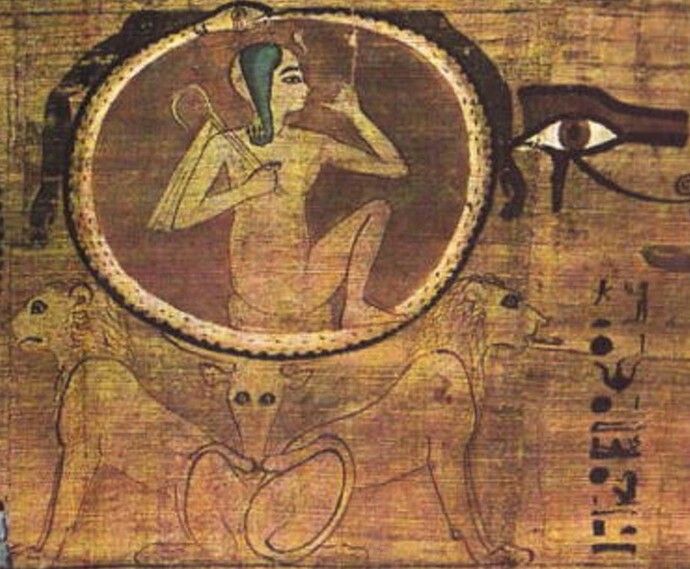
Possibly the oldest known depiction of an ouroboros, is from the Heroub, from the 21st dynasty in Egypt, 11th Century BC.
Note the 2 lions, with 2 snakes (or are that their tales?) and the eye…
1d7e526628689252e669ad39bad8c050.jpg

b6daabe20ae49b2da295161c7e352dbdb8a14f9c.jpg


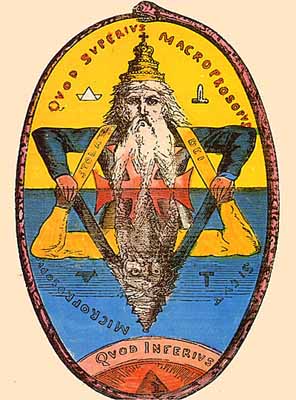
In his 19th-century book Transendential Magic, Eliphas Levi illustrated: “The great Symbol of Solomon. The Double Triangle of Solomon, represented by the two Ancients of the Kabalah; the Macroprosopus and the Microprosopus; the God of Light and the God of Reflections; of mercy and vengeance; the white Jehovah and the black Jehovah.
ouroborosolomon.jpg

https://www.thoughtco.com/ouroboros-4123019


The word ouroboros is Greek – tail-eater – ouro (tail) boros (eating). Possibly before the Egyptians it was already used in Babylon or Sumer.
Greece, China, India, Japan, the Middle East, Romans, and Native Americans have all made drawings that represented this symbol. Freemasons, and Theosophical societies often reference it as well.
The double ouroboros is a symbol for infinity, when flipped vertically.

The following symbol is used in alchemy; a hexagram (Seal of Solomon) and double-headed ouroboros (both wear crowns). The symbols on the star represent the astrological portion of the symbol, Jupiter (tin), Venus (copper), the Moon (silver), the Sun (gold), Mars (iron) and Saturn (lead), with Mercury (!) at the centre.
etudes_table_emeraude_solve-coagula-jpg.143761


Mercury, Mercurius (quicksilver) is a serpent or dragon in alchemy – serpens mercurialis.
Inside the hexagram: animalia (animal), vegetabilia (vegetable) and mineralia (mineral); mare (sea), terra (land), Ros Pluvia (dew rain).

The following picture shows the sun and moon in opposite positions, which symbolises how the world has been purposefully shifted by man.
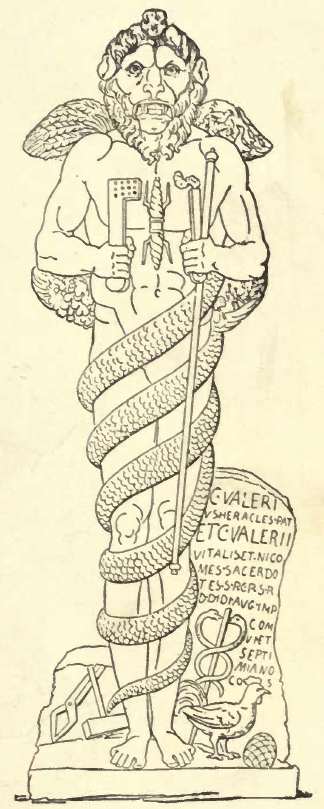
The man holds 2 Caduceuses of Hermes in his hands. The spiral effect indicates an expansion of knowledge, and the undulating dance of cosmic forces. The double snakes of the caduceus also represent duality and the unification of polar opposites. Caduceus means “herald’s staff of office” in Greek, and the centre rod was a symbol of Hermes who was the messenger of the Elohiym.
The wings symbolize ascension, and higher awareness.
caduceus-.jpg


What’s also interesting (although maybe not in the context of this thread) is that the tarot consists of 22 cards, and 22 is the number of paths in the Kabbalah Tree of Life. There are also 22 letters in the Hebrew alphabet: http://in5d.com/all-about-as-above-so-below-illustrated/
(archived here: http://archive.is/5OVAb)


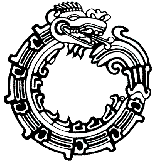
The Aztec Pyramid of the Feathered Serpent 700-900 AD features a seven-segmented ouroboros.
ouroborosaztec.jpg


The Order of the Dragon of Annam was founded in 1886 in Indochina (Vietnam) and dissolved at the end of WW II (1945). See decoration for the class "Grand officer": https://en.wikipedia.org/wiki/Order_of_the_Dragon_of_Annam
250px-Dragon_of_Annam.jpg
 
Last edited:
Firestarter said:
De Vere recommends the book “The First and Last Freedom” by Jiddu Krishnamurti for anybody that wants to explore the “transcendent concept“ of the Dragons.
In 1902, Rudolf Steiner became General Secretary of the German-Austrian division of the Theosophical Society. In 1909 he "discovered" Jiddu Krishnamurti, an adolescent Indian boy, who he proclaimed as the most suitable candidate for “World Teacher”.

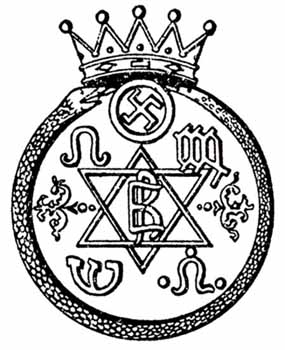
The Ouroboros, Swastika, hexagram and crown are featured in the seal of the Theosophical Society.
ouroborostheo.jpg


The Theosophical Society was founded in New York in 1875 by Helena Blavatsky, Colonel Henry Steel Olcott and William Quan Judge to advance “Theosophy”.
Blavatsky explained one of the main goals of the Theosophical Society as to guide humanity towards its ultimate, immutable evolutionary objective: the attainment of perfection and the conscious, willing participation in the evolutionary process…
That’s probably quite similar to the ultimate sadistic Utopia as described in 1984 and Brave New World: https://en.wikipedia.org/wiki/Theosophical_Society


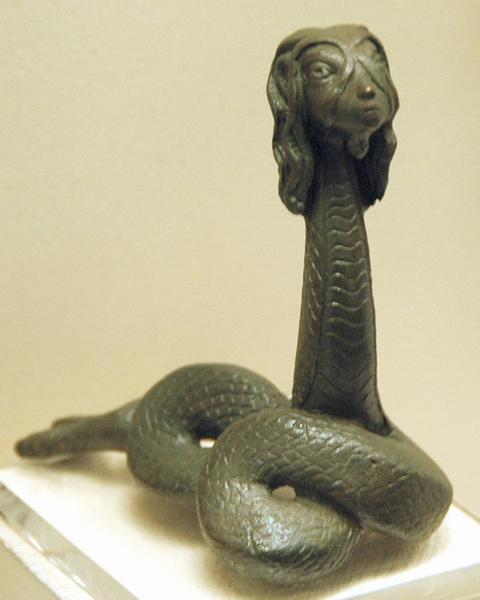
The cult of the snake god Glykon was introduced in the mid-second century AD by the Greek prophet Alexander of Abonutichus. The cult probably originated in Macedonia, where similar snake cults were already known in the fourth century BC.
See the statuette of Glykon, with a human head, ca. 150 AD – 300 AD.
SCP-596_Snake_Statue.jpg


The cult of Glykon remained alive in the entire area between the Danube and Euphrates until at least a century after the death of the prophet in ca. 170.
There is possibly a link to the cult of Sarapis, who worshipped a similar serpent: http://www.livius.org/articles/religion/glykon/


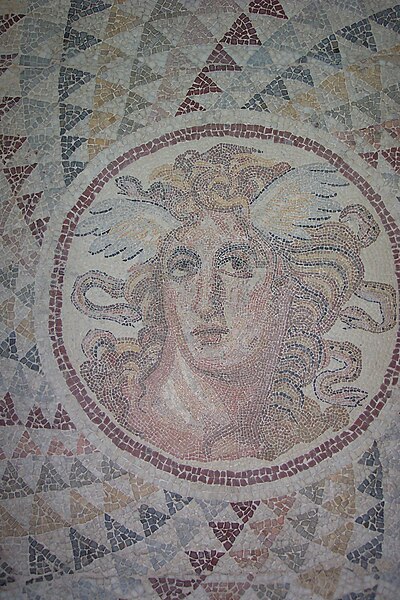
The Greek Medusa had “hair” of snakes.
400px-Medusa_tiles.JPG


Krishna, one of the most important “humans” in Hinduism, was often portrayed dancing on the Kaliya serpent.
423px-Krisyna_on_the_serpent01.jpg


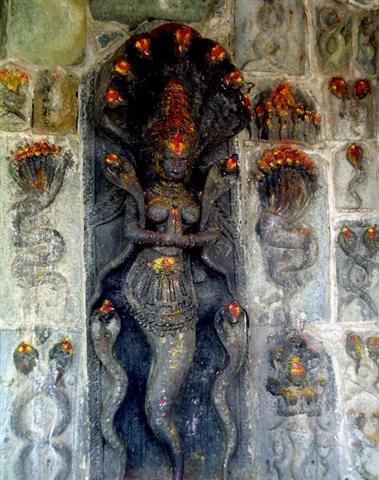
See the altar at the main temple in Belur Karnataka, India with the snakes for Jory Goddess.
Naga3.jpg


See the painting of Queen Elizabeth I, with the serpent on her left arm.
NON SINE SOLE IRIS” can be translated as “Not nothing without the sun” this is no longer worshipping the sun, but claiming to be God…
6a00d83454ed4169e2014e5fd99e69970c-pi-e1308228403255.jpg
 
Last edited:
Livingstone – Terrorism and the illuminati

I finally found a better book on the elite “Dragon, grail” bloodline than the writings of Nicholas de Vere.

David Livingstone – Terrorism and the illuminati; a three thousand year history (2007): http://www.lovethetruth.com/books/terrorism_illuminati.pdf

Livingstone tries to explain the “War on terror” (in 2007) with a 3000 year history lesson. This was obviously too ambitious (in 283 pages), but the book contains lots of good information (with a long reference list).
In the context of this thread the first part of the book is the most relevant. In this post in short I’ll present information from the book, on: 1) The Mithraic bloodline; 2) The “Luciferian” religion; 3) Secret societies.


Mithraic bloodline – Mithraism
According to Livingstone the most important bloodline is the Mithraic bloodline.
It began with a Persian Royal family, who intermarried with that of Alexander the Great. By combining with the blood of Herod the Great, these families created the leading mystery school of the Roman Empire - the Mysteries of Mithras.
Mithras was prevalent in the part of Asia Minor that was later dominated by Scythians and Medes. The House of Commagene, the family of Herod the Great, the Royal Family of Emesa (Syrian priest-kings of Baal), and the family of Julius Caesar produced Antiochus IV.

They combined Mithras worship of the heretical Magi with the emerging Kabbalistic mysticism, to form the Mysteries of Mithras. The Mithraic mysteries adapted the ancient king-worship of the Babylonians to worship the emperor, as a personification of their Sun god. Its god Mithras was represented in the physical form of Alexander the Great.
The source of the early Kabbalistic influence, known as Merkabah mysticism, would be the occult Jewish community of the Essenes, who according to the Illuminati is a source of their doctrines. This tradition was supposedly transmitted to the West during the Crusades through the heretical Ismailis of Egypt.

Mithraism was the most popular cult of the Roman Empire and remained the core doctrine of the Illuminati for centuries. The Cult of (the mysteries of) Mithras would ultimately produce the leading Illuminati bloodlines that have been intermarrying with one another, to preserve their “sacred” bloodline.
Mithraism, through Emperor Constantine (of the Mithraic bloodline), successfully hijacked the Christian faith, by producing the Bible and Catholic Christianity.


Nephilim, Anakim, Canaanites – Scots, Irish, Saxons
The Luciferians claim to descend from the “Fallen Angels” from the Tenach (Old Testament) Book of Genesis - the Nephilim.
There are different theories on what the Nephilim were, some have translated it with “mighty men”, and - if I understand correctly - according to David Icke the Nephilim are shapeshifting reptilians.
Apocryphal Jewish texts explain that they were Lucifer and his legions that were cast out of Heaven and took wives from the descendants of Cain. According to occult interpretation the Canaanites represented survivors of the Anakim (see Deuteronomy 9:1-2).
These Anakim were reported as the original inhabitants of Atlantis – Aryans. The Illuminati consider the Aryans as the original core bloodline, a hybrid of humans and “Gods” that preserve occult knowledge.
According to history falsifiers these Aryans (a.k.a. Indo-Europeans), survived the Flood, or sinking of Atlantis, and found refuge in the mountains of Asia. From there they started their conquest of Central Asia, Iran (Persia), and from Europe the rest of the world.
Odin was worshipped as a god – the one-eyed sorcerer, with a long white beard that could change shape at will. Ancient scholars identify him with Mercury (the Greeks Hermes).

According to Kabbalistic interpretation, the Jewish kings descend from Joseph and his daughter-in-law Tamar (a Canaanite). Their son Perez was David’s ancestor.
Solomon, to whom much of Kabbalistic tradition is attributed, was the son of David from Bathsheba (a Hittite). According to Kabbalistic interpretation, the Messiah is a descendant of the royal Davidic bloodline, including descend from the Satanic lineage of the Nephilim (through the Canaanites).

According to II Kings 17:16-20, the Tribes of Israel were conquered because:
And they left all the commandments of the Lord their God, and made them molten images, even two calves, and made a grove, and worshipped all the host of heaven, and served Baal.
And they caused their sons and their daughters to pass through the fire, and used divination and enchantments, and sold themselves to do evil in the sight of the Lord, to provoke him to anger.
Therefore the Lord was very angry with Israel, and removed them out of his sight: there was none left but the tribe of Judah only.
Also Judah kept not the commandments of the Lord their God, but walked in the statutes of Israel which they made.
And the Lord rejected all the seed of Israel, and afflicted them, and delivered them into the hand of spoilers, until he had cast them out of his sight.
For he rent Israel from the house of David; and they made Jeroboam the son of Nebat king: and Jeroboam drave Israel from following the Lord, and made them sin a great sin.

The exiled tribes migrated to a region of the Medes, Medea, today’s northern Iraq, or Northwest Iran - Kurdistan.
According to the Greek historian Herodotus in the fifth century BC:
These Medes were called anciently by all people Arian [Aryan]; but when Medea, the Colchian, came to them from Athens, they changed their name.
According to Herodotus, the Scythians emerged from beyond the Euphrates, from across the Araxes, an Armenian river that borders Armenia, Iran and Azerbaijan. The Scythians first appear in Assyrian annals as Ishkuzai, related to the modern term Ashkenazi “Jews”, supposedly from Ashkenaz.
Many modern Iranians descend from Medes. Medes heritage today is claimed by groups in Iran, like Kurds, Lurs, Isfahan and the Turkic languages-speaking Azeri.

Esau was “red all over like a hairy garment”, and called Edom (red). According to Herodotus, the Scythians have “deep blue eyes, and bright red hair” and practiced ceremonies dedicated to Bacchus (the Greek Baal).
In the eighth century AD, Rabanus Maurus, Archbishop of Mayence, wrote that Joseph of Arimathea was sent to Britain, and then to France. He carried with him the “Holy Grail”, which he concealed for safekeeping at Glastonbury Tor, where he established the first church in the British Isles, this developed into Glastonbury Abbey. His descendants would eventually culminate in King Arthur.
King Arthur also descended from the Roman Emperor Constantine, who converted the Roman Empire to Christianity in 333 AD. King Arthur’s mother, Igraine, descended from Dionotus II King of Britain, the great-grandson of Constantine. His wife Elen Lwyddog verch Eudaf, whose mother descended from Roman Emperor Marcus Aurelius, belonged to the Herodian line.
Caesar’s grandson, Gaius Calpernius Piso, had married Mariamne (sister of Herod Agrippa). Their granddaughter, Pompeia, was the wife of Emperor Trajan, who was the grandfather of Marcus Aurelius. Trajan and Marcus Aurelius used the dragon standard (Draco) of Scythian origin, which was later adopted by the Pendragon family.
Drusilla of Mauritania was the great-granddaughter of Marc Antony and Cleopatra.

According to Irish legend, the Scottish originate from Fenius Farsaidh, a descendant of Edom, who founded the Kingdom of Scythia.
Tamar married one of the later Irish Kings, Eochaid I, from which the Kings of Ireland descended. She and her companions brought with them the Ark of the Covenant, a golden-coloured banner with the heraldic device of a red Lion and the Stone of Destiny.

The Saxons also descend from the Scythians.
According to governor Ptolemy of Commagene (that was founded in 162 BC), the Saxons are Sakai, a Scythian race from Media.


Charles Martel, Plantagenet, Habsburg
The Carolingians were partly of Merovingian descent, and represented the union of the Mithraic bloodline. Their lineage included the royal dynasty of Armenia, but also branches of Eastern European aristocracies of Poland, Bulgaria and Hungary, that descended from the Khazars. The father of Charlemagne, Charles Martel, was the primary representative of the Mithraic bloodline.
During the early Middle Ages, the Mithraic families intermarried with their Saxons brethren, and descendants of Charles Martel.
Rabbi Makhir, often confused with Natronai, arrived in southern France by the invitation of Charles Martel. According to James Allen Dow, Natronai married Rolinda of Aquitaine, while Makhir married Alda (daughter of Charles Martel).

The Paulician influence in southern France, through Catharism would become the secret Gnostic doctrine of the Carolingians, known as the Order of the Rose, and was the hidden power behind the Knights Templar, Rosicrucians, Freemasons, and finally the Illuminati.

During the Crusades, a bloodline by intermarriage with the Eastern aristocracy, through Dubrawka of Bohemia, resulted in the Stuarts and Sinclairs bloodline (also from Scythia).
The first Plantagenet king of England, Henry II, established the Angevin Empire. He was succeeded as king of England by his son Richard I, the Lion-Hearted, who came to rule England, Scotland, Ireland and half of France.

The family that became the most powerful were the Habsburgs – of the Luciferian bloodline combined with the Jewish exilarchs. The Habsburg family would develop and spread the “New Kabbalah”.
The Habsburgs continued their acquisition through dynastic marriages with the houses of Bohemia, Moravia and Hungary; the double-headed eagle became their heraldic symbol.


Lucifer, Kabbalah, Paulicians, Cathars
The secularism of the Illuminati is based on ancient occult teachings. To the upper levels of the Illuminati, Lucifer “liberated” man, showing that there is no truth.
The secret “Gnostic” version of Christianity, also derived from Mithraism, continued to compete with Catholicism, in the form of secret societies that practiced “witchcraft”, like the Templars, Rosicrucians and Freemasons,.

In Babylon, the heretical Jews practiced Babylonian magic. Because magic was forbidden in Judaism, they rejected the God of Israel, and worshipped Lucifer (or Baal) instead. Their faith is now known as the Kabbalah.
The Kabbalah was further shaped in ancient Greece.

Paulicians believed that there was a God who made the world, and the “God of heaven” who created souls and should be worshipped - Lucifer. For the Paulicians, Christ was an angel sent into the world by their “God”. Jesus’ mother was not the Virgin Mary, but the heavenly Jerusalem. This idea comes from the Kabbalah, where the “Shekhina” (beloved) is equated with the “congregation of Israel”.

Cathars were Gnostic. The New Testament they attributed to the benevolent God, but the God of the Tenach was evil (Satan). They also believed that Jesus Christ was evil, and that Mary Magdalene was his concubine. They claimed that the good Christ, never ate, nor drank, and never assumed physical form, except spiritually in the body of Paul. They also regarded the Church of Rome a “den of thieves”.


Order of the Garter, Round Table, RIIA
The traditions of the Templars were continued by the Order of the Garter, founded by Edward II’s son, Edward III King of England. Edward III’s sister, Joanna, married King David II of Scotland (son of Robert the Bruce). While in exile in France, David created The Guarde De Ecosse, derived from the Templar faction known as Scots Guard.
The Queen is not only the Grand Patroness of Freemasonry, but also the head of the Order of the Garter. The Order of the Garter reigns over Freemasonry worldwide. When a Mason reaches the 33rd degree, he swears allegiance to the Garter, and thereby to the Queen.
According to John Coleman, the Knights of the Garter are the inner-sanctum of Her Majesty’s Most Venerable Order of St. John of Jerusalem - the leaders of the Illuminati hierarchy, and Queen Elizabeth II’s most trusted “Privy Council”.
The Order of the Garter is closely connected to the Order of the Rose. Important symbols for the Illuminati bloodline include the rose, lily, fleur-de lis, double-headed eagle, and the skull and crossbones.

The promotion of the interests of the “Crown” became the guiding principle of the Order of the Garter.
Mason Cecil Rhodes founded the Round Table and left his entire estate to fellow Mason Lord Nathaniel Rothschild as trustee.
The man chosen by the Round Table to bring the US under the control of the Rothschilds was German-born Jacob Schiff. Schiff financed the Standard Oil Company for John D. Rockefeller, the Railroad Empire for Edward R. Harriman, and the Steel Empire for Carnegie.
Round Table members including Lionel Curtis, Balfour and Milner formed the Royal Institute for International Affairs (RIIA) of which Arnold Toynbee later became the director. Col. House with Rockefeller family funding founded its American counterpart - the Council on Foreign Relations (CFR) with members like J.P. Morgan, Paul Warburg, and Jacob Schiff.

H.G. Wells, head of British foreign intelligence during WW I, was also a founding member of Rhodes-Milner Round Table, and tutored Aldous and Julian Huxley at Oxford. It was also Wells who introduced the brothers Huxley to Aleister Crowley during the late 1920s.
Aldous and Julian Huxley were grandsons of Thomas H. Huxley - a founder of the Round Table, and a lifelong associate of Arnold Toynbee. Toynbee was a member of the RIIA, headed the Research Division of British intelligence throughout WW II, and served as wartime briefing officer for PM Winston Churchill.
Aldous Huxley was a member of the Dionysian cult Children of the Sun (comprised of children of Britain’s Round Table elites).

In 1916, Prime Minister of England Lord Asquith had to resign because he had opposed Zionist interests.
David Lloyd George (a lawyer for the World Zionist Organization), Winston Churchill and Arthur Balfour of the Round Table were then placed in power.


Winston Churchill - Druid
Winston Churchill was a descendant of John Churchill, first Duke of Marlborough. Nathaniel Rothschild was an intimate friend of Winston’s father, Lord Randolph Henry Spencer Churchill. The famous “V” sign used by Churchill comes from Aleister Crowley.
Winston Churchill’s legal surname was Spencer-Churchill, as he was related to the Spencers, though his branch of the family only used the name Churchill in public life. The mother of Randolph Churchill, and his great-grandfather’s wife, were Stewarts (descendants from James Douglas).
Winston Churchill’s mother was Jennie Jerome, daughter of American Jewish millionaire Leonard Jerome.
Winston Churchill was already a Mason and Druid before he became a Knight of the Order of the Garter.

Magian, or Kabbalistic, teachings are clearly discernible among the Druids (that was designed as an exclusive Masonic Society). The Druids were involved in astronomy, astrology, vegetarianism, believed in reincarnation, and worshipped Dis or Pluto (god of the Underworld).
In 1908, Churchill was initiated into the Albion Lodge of the Ancient Order of Druids at Blenheim. Possibly Churchill was also a member of the Archaeological Order of Druids.
winstondruid.jpg


The witchcraft revival at the beginning of the twentieth century was the result of the efforts of Gerald Gardner. Gardner was a member of numerous esoteric orders including the Ancient Druid Order (not to be confused with the Ancient Order of Druids).
Gardner’s contribution to the growing number of esoteric orders (later part of the New Age movement) was Wicca: http://www.redicecreations.com/specialreports/2005/09sep/winstondruid.html


WWF, Lucis, Aspen Institute
The World Wildlife Fund was created by Prince Philip of the House of Oldenburg. He is the great-great-grandson of Grand Master of the Asiatic Brethren, Karl Landgrave of Hesse-Kassel, and also descends from George II, Catherine the Great of Russia, and Frederick I King of Prussia.

Alice Bailey, who succeeded Annie Besant as head of the Theosophical movement, with her husband Foster Bailey, founded the Lucifer Publishing Company, that later changed its name to Lucis Publishing Company.
The Lucis Trust founded the Temple of Understanding, which controls the World Goodwill that was launched in the early 1960s. Its founding sponsors include: John D. Rockefeller IV; then-Secretary of Defense Robert S. McNamara, Planned Parenthood founder Margaret Sanger, IBM president Thomas J. Watson, Socialist Party leader Norman Thomas, Eleanor Roosevelt and Time-Life president James A. Linen.
Together with its Arcane School of the occult and World Goodwill, the Lucis Trust works to implement “the Plan”, which was described in 24 books by Bailey.

When the Frankfurt School settled in the US, the Columbia University in New York was chosen. They hypothesised that through terror, man can be reduced to a childlike and submissive state, and become the perfect mind controlled slave.
They experimented through the Tavistock Institute and the CIA’s MK-ULTRA.

In 1949, Aldous Huxley and John Maynard Hutchins founded the Aspen Institute. In 2007, its director was Canadian multi-millionaire Maurice Strong – in 2007, Senior Advisor to both UN Secretary General Kofi Annan and World Bank President James Wolfensohn.
In 1978, Strong bought the Colorado Land & Cattle Company, which owned 200,000 acres in Colorado, from Saudi arms dealer Adnan Khashoggi.
The Aspen Institute aims to carry out “the plan” with the UN, Club of Rome, Tavistock, and like-minded organisations originating from the Round Table through the environmental movement. They use the scare of nuclear bombs to push their agenda.
They are also affiliated with the New Age movement…


There is a lot more in the book, but in the context of this thread this should be enough…
 
Druid, Knight of the Garter and PM Winston Churchill was a descendant of the Duke of Marlborough and the Spencer family.
See the Duke of Marlborough's Coat Of Arms with elements of both the Churchill and Spencer arms – the double-headed eagle (phoenix), 3 dragons, lions, 2 crowns and the cross of St. George.
dc53a3eea8a7ec5a336ca92e7fe28f0f.jpg


I thought that the lion in all these coat of arms of the aristocratic families is the Lion of Judah, but it looks like I was fooled again...
See the winged lion of Mithras; also note the serpents, dragons.
1k72bwmyqqqq.jpg


Archaeology has revealed that a lion with eagle's wings was a common symbol in Babylonia. The eagle often symbolises the sun god, so a winged lion symbolises the sun powering the lion.
The symbol of St. Mark is really the Babylonian winged lion facing the symbol of the sun god. The lion of Daniel 7 has eagle's wings, a reference to Babylon: http://www.whale.to/c/winged_lion.html

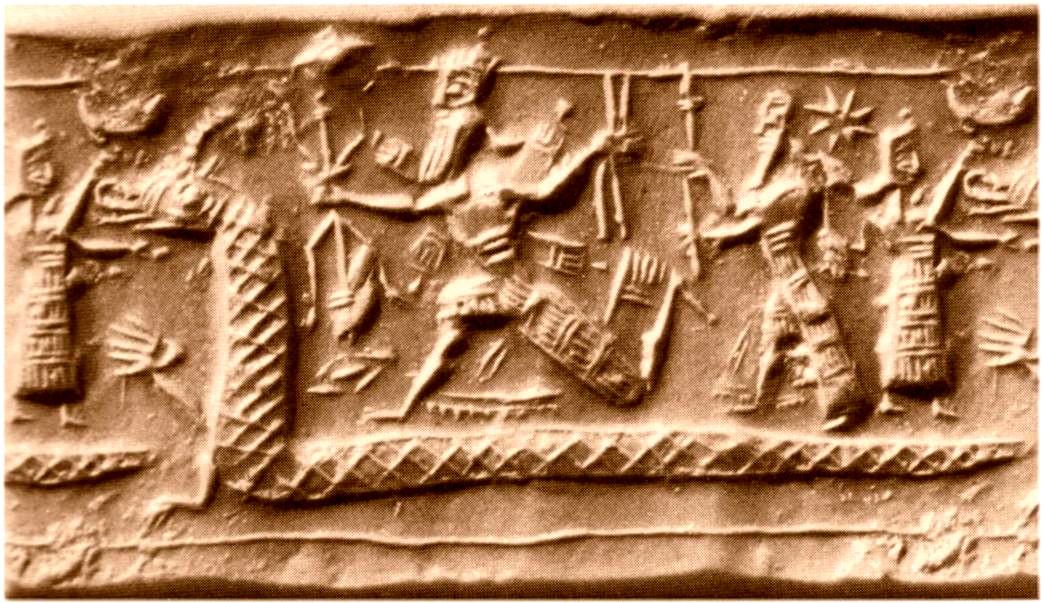
See Tiamat the chaos serpent on a Babylonian seal.
tiamat.jpg


Traces of Mithras go as far back as the fourteenth century BC. Mithras was the greatest of the Yazats (angels); an angel of light associated with the sun. Mithras has a thousand ears, ten-thousand eyes.

The Mehregan feast of Mithras (or baga) in the month Bagayadi was one of the most ancient and most popular festivals for the ancient Iranians. This feast for the sun-god was probably pre-Zoroastrian of the Proto-Iranian (Aryan) era.

Mithras was very popular among the Roman military.
In Jewish mysticism, Mithras appears as Metatron, the highest of the angels. Mehregan, Tiragan and Norooz, were the only Zoroastrian feasts mentioned in the Talmud: http://www.cais-soas.com/CAIS/Celebrations/mehregan.htm
(archived here: http://archive.is/H8D4Q)

See the Achaemenid Seal of Emperor Artaxerxes standing before Mithras Anahit – with the lion and sun motif.
Artaxerxes_Mithra_Anahit_Lion_and_Sun_Motif.gif


In the ancient Hindu text Rig Veda, Mitra is mentioned over 200 times, who seduces people by Maya (illusion). The Sun is said to be the eye of Mitra.
Mitra and Varuna are two devas (deities) frequently referred to in the Rig Veda. Their connection is so close that they are often considered as one Mitra–Varuna.
See the statue of Varuna with Varunani, discovered in Karnataka, 8th century AD.
200px-Varuna_with_Varunani.jpg


In the Rig Veda, Vritra is a serpent or dragon, also known as Ahi (snake). The father of Vritra was Tvashta and his mother Danu.
In most descriptions, Vritra appears as a snake or a three-headed dragon.

According to the Rig Veda, Vritra kept the waters of the world captive until he was killed by Indra. The combat began after Indra had drunk a large volume of Soma to empower him. Tvashtri fashioned the thunderbolt (Vajrayudha) for Indra.
For slaying Vritra, Indra became known as Vritrahan (slayer of Vritra) and also as "slayer of the first-born of dragons". After defeating Vritra he also defeated his mother, Danu: http://allaboutdragons.com/dragons/Vritra

See Indra subduing Vritra.
vritra7.jpg
 
Order of the Garter

Carolus “Charles” Martel (688-741) is the founder of the Carolingian dynasty.

With all of the top aristocratic families in Europe descending from his daughter Alda and Rabbi Makhir, in particular from Alda’s son Guillaume de Gellone (a.k.a. William of Orange) and daughter Ida Redburga, arguably the Carolingians still rule the world. The Holy Roman Empire was founded by another grandson of Carolus “Charles” Martel, Charlemagne (the nephew of Alda).
See the 13[SUP]th[/SUP] century tomb of Charles Martel.
06bf91e693f18007449601f39225c8677db69b3e.jpg


Henry II "Curtmantle" (1133 - 1189) was the first Plantagenet King of England, he was crowned in 1154.
The Plantagenets would rule England for the next 331 years.

King Edward Plantagenet III (1312-1377) was the fifth Plantagenet ruler of England after him in the direct line of succession. The Most Noble Order of the Garter was founded by King Edward III in 1348.
See Edward III from the Bruges Garter book.
80b18f1a85b676098d6f1eaa272e7367869446de.jpg


As a direct descendant of the Roman Ferreoli lineage, Edward III also held a claim as the heir as king of nearly half of present-day France.
The first Ferreoli to rule in France was Roman praetorian prefect Tonantius Ferreolus (ca 405 - ca 469). His descendants through a series of strategic marriages ultimately laid a claim to the French throne before the Henry II became the first Plantagenet Sovereign of England.
Also through Edward III’s mother Isabell of France (1295 – 1358), the daughter of King Philip IV Valois- Capet (1268 - 1314), he could claim the French throne.
Edward III later ceded the French crown to his cousin Jean II Valois, who was a direct descendant of Hugh Capet (939 - 996). Edward III ratified the Treaty of Brétigny in 1360 that made Jean's monarchy a reality.

The Order of the Garter was styled after the Equite Knights of Rome (a.k.a. the Equestrians).
The Equestrians later became prefects (praefecti praetorio) who serve as the Roman emperor's personal guard.

Richard III, was the last king of the Plantagenet dynasty.
After he was killed, Henry Richmond (later Henry VII Tudor) claimed the throne which began the relatively short-lived Tudor dynasty.

Sir Thomas de Holland (1314-1360) was the 13th out of 25 knights Edward III selected for the Order of the Garter in 1344. These 25 knights are considered its founder knights. His brother Sir Otho de Holland was also one of the founding knights. Their father was the first Baron of Upholland.
See the coat of arms of Sir Thomas de Holland.
5d92982013b140aedd5148317fa4324f946b8c94.jpg


The Holland lineage originally hailed from Friesland; their ancestors were counts and princes of Friesland since before the birth of Jesus Christ. Legend has it that Frisians immigrated to Punjab, India in the 14th century B.C. This group may indeed be the source of the earliest “Aryan” influence in the ancient Punjab region, which predates the formation of the Scythian ethno-cultural identity.
Alexander the Great enlisted them as mercenaries when he invaded India. They eventually returned to the Friesia soon after Alexander's death. Adel I Friso became the first dynastic king of Friesland upon their return in the 3rd century B.C.
Friesian descendant Sir Siward de Longworth de Holland came to England in the early 11th century, probably hired as a mercenary by William I, 6[SUP]th[/SUP] Duke of Normandy.

Thomas had 4 four children with Joan Plantagenet.
A year after his death in 1360 she married Edward III’s son, Edward IV "the Black Prince". Their son Richard III reigned England from 1377 to 1399.

King Henry V restored the title and honours to the Holland family in 1439 in recognition of the faithful service of John Holland.
The title went extinct after Henry Holland (1430 – 1475), John's only son became attainted as a Lancastrian in 1461, thereby forfeiting the peerage.

William Bruges, the founding Garter King of arms, kneels before St George, who’s slaying the dragon.
871a4cf8dd228429eeba7c0c3151edef06a0f42d.jpg


John de Grey II (1300-1359) was another founder knight of the Order of the Garter.
The Earl Grey tea bland is named after Charles II, the 2nd Earl of Grey (1764-1845).
https://www.goodreads.com/author/show/4524514.Steven_Wood_Collins/blog/tag/order-of-the-garter
(archived here: http://archive.is/cbNNI)


Following is a complete (?) list of the Knights and Ladies of Order of the Garter, the most powerful "Order" in the world (1012 members since 1348).
It includes 6 Holy Roman Emperors, some (former) British Prime Ministers, and lots of members of the British and other royal families.

Current members of the Order of the Garter, from the British Royal family.
Elizabeth, knighted in 1947.
Philip, in 1947.
Charles, in 1958 (when he was only 9).
Edward, in 1985.
Anne, in 1994.
Alexandra, in 2003.
Andrew, in 2006.
Edward, in 2006.
William, in 2008.

Princess Beatrix of the Netherlands, in 1989.
King Willem-Alexander of the Netherlands, in 2018.
Prince Juan Carlos of Spain, in 1988.
King Felipe VI of Spain, in 2017.

Queen Margrethe II of Denmark, in 1979
Grand duke Jean of Luxembourg, in 1972.
Emperor Akihito of Japan, in 1998.
King Harald V of Norway, in 2001.

The following are the remaining current, still alive, Knights and Ladies from the Garter, all from Britain.
Baron Edwin Bramall, in 1990.
Baron John Sainsbury, in 1992.
Baron John Baring, in 1994.
Timothy Colman, in 1996.
Duke James Hamilton, in 1999.

Baron Peter Inge, in 2001.
Antony Acland, in 2001.
Baron Robin Butler, in 2003.
Baron John Morris, in 2003.
John Major, in 2005 (former British PM).
Baron Richard Luce, in 2008.
Thomas Dunne, in 2008.

Baron Nicholas Phillips, in 2011.
Baron Michael Boyce, in 2011.
Baron Jock Stirrup, in 2013.
Baroness Eliza Manningham-Buller, in 2014.
Baron Mervyn King, in 2014 (former Governor of the Bank of England).

Baron Charles Kay-Shuttleworth, in 2016.
David Brewer, in 2016.
Mary Fagan, in 2018.
Viscount Alan Brooke, knighted in 2018.

No less than 8 Holy Roman Emperors were Knights of the Garter…
Sigismund - Holy Roman Emperor from 1433–1437;
Albert V, Duke of Austria from 1397–1439 - later Holy Roman Emperor as Albert II;
Frederick III - Holy Roman Emperor 1415–1493; [Not Installed]
Maximilian, King of the Romans 1459–1520 - later Holy Roman Emperor Maximilian I;

Charles, Archduke of Austria and Duke of Burgundy 1500–1558 – later Holy Roman Emperor Charles V;
Ferdinand, Archduke of Austria 1503–1564 - later Holy Roman Emperor Ferdinand I;
Rudolf II - Holy Roman Emperor 1552–1612;
Maximilian II - Holy Roman Emperor 1527–1576, see his Coat of arms.
13c58c849e1b3c1aba08fb0fd1b040257b21eb1e.jpg


Peter II, Emperor of Brazil, was the first non-European member of the Garter in 1871.
He was followed by…

Naser al-Din, Shah of Persia, knighted in 1873.
Muzzafir al-Din, Shah of Persia, in 1903 (who gave the Anglo-Persian Oil Company a 60 year oil monopoly).

Emperor Mutsohito of Japan, in 1905.
Emperor Yoshihito of Japan, in 1912.
Emperor Hirohito of Japan, knighted in 1929 (degraded 1941, restored 1971).

Emperor Haile Selassie of Ethiopia, knighted in 1954: https://en.wikipedia.org/wiki/List_of_Knights_and_Ladies_of_the_Garter
 
Last edited:
Honi soit qui mal y pense

The motto of the Order of the Garter is in Old French “Honi soit qui mal y pense and literally translates: “Shame on him who thinks evil of it”.
In contemporary French usage, it is usually used to insinuate that somebody, something isn’t as innocent as it appears but there are hidden agendas.

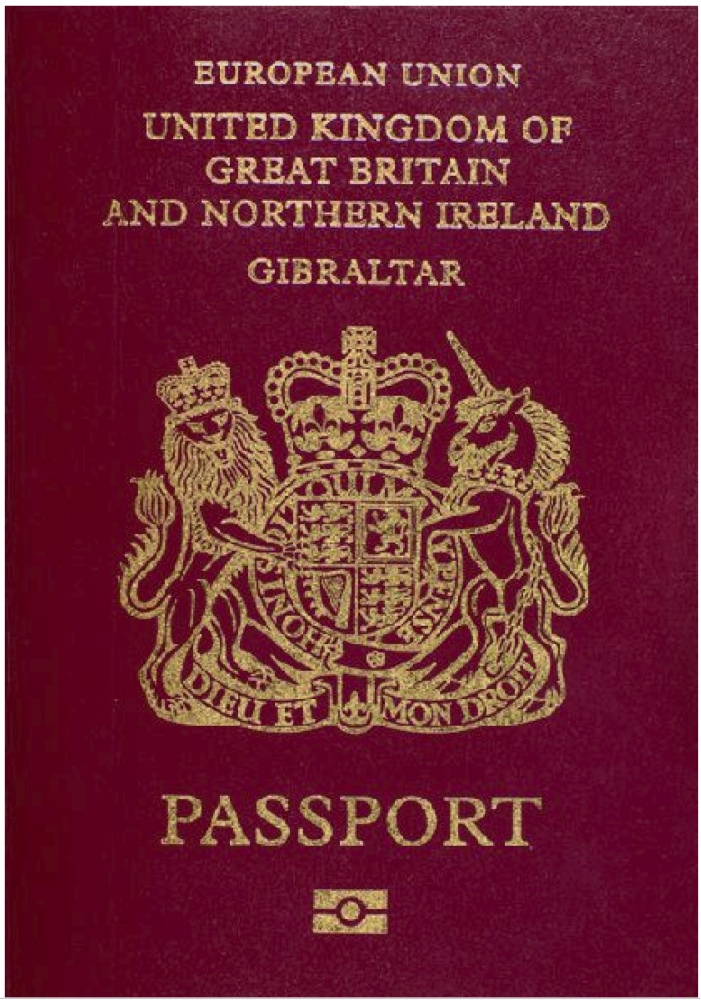
Honi soit qui mal y pensecan be found on the front cover of the British Passport, Cayman Islands, and Gibraltar.
See the Gibraltar passport.
Passport_of_Gibraltar.jpg


The motto also appears in the source code for both the Apollo 11 and Apollo 13 lunar modules: https://en.wikipedia.org/wiki/Honi_soit_qui_mal_y_pense


The Stamp Act, passed on 22 March 1765 by the British Parliament, caused uproar in the colonies over colonists being forced to buy a British stamp for every official document they obtained. The controversial act was enforced in November 1765.
The stamp displayed an image of a Tudor rose framed by the word “America” and the motto of the Order of the Garter “Honi soit qui mal y pense.
137b7fb622436f28fe7cf6c529651bc4ff91ecf2.jpg


The colonists greeted the stamps with outrage and violence. Colonial merchants called for a boycott of British goods; some even organised attacks on customs houses and the homes of tax collectors.
A group of Bostonians for example burned a building they thought to be the “Stamp Office” and invaded the home of stamp distributor Andrew Oliver, threatening to kill him. Oliver had already fled the premises and resigned his post. In every state, except Georgia, the “stamp master” resigned under duress, making the Stamp Act impossible to implement.

On 18 March 1766, Parliament voted to repeal the Stamp Act.
At the same time they passed the Declaratory Act, which confirmed that British government had total legislative power over the colonies. The Declaratory Act carefully omitted any assertion of Parliament’s right to tax colonists.
At the same time, Parliament passed the Revenue Act of 1766, which compensated Britain’s loss of income from the stamp tax with taxes on molasses (an ingredient in making rum). The colonists paid this tax without complaint.

The protests against the Stamp Act is sometimes considered one of the first organised political actions of the American Revolution: https://www.history.com/this-day-in-history/stamp-act-remembered
(archived here: http://archive.is/fpfF1)


The Abbey of St Paul’s outside the Vatican Walls shares a common history with the Basilica for which it was founded.
The coat of arms of the Abbey still includes the garter and the motto: “Honi soit qui mal y pense”, which surround the shield and the traditional image of the sword of Paul

During the Middle Ages, the kings of England exercised the function of protectors of the Basilica: http://www.basilicasanpaolo.org/interno.asp?sezione=BASILICA DI SAN PAOLO > STORIA&id=32&lang=eng


Here’s a British Royal Fusiliers cap badge featuring Honi soit qui mal y pense. I’m afraid I don’t know what the top part signifies (a tree, fire?).
2fb2ab7b2a6ccfeef773bfbb2705213b8656d6b7.jpg


See the Coat of Arms for Heidelberg Castle, Germany (1683).
e9b96b0742dcbc77aa10ecae2c8823c9c2a3c625.JPG


The Coat of arms over the entrance to the electoral office in Stolpen, Germany.
22823559d0e54c885fce4b346605ac64f8ebfc2f.jpg


It appears on the Royal Coat of Arms of the British East India Company

Honi soit qui mal y pense” was also on Hong Kong coins – see the Tael (1867).
13d6cd4147f26e3244ee5a82484e481f74668451.jpg

http://64.62.227.27/v3/new-world-order/2018/8089.html?currentSplittedPage=0
(archived here: http://archive.is/ACdVE)


The following French Caricature, shows that already in 1899 people knew about the true nature of British imperialism.
3_imperilism.jpg
 
Back
Top