When Jehovah allowed a Molech like child sacrifice

jmdrake

Member
Joined
Jun 6, 2007
Messages
52,897
So, I've seen the bump of (to me anyway) the most disturbing post in the Peace Through Religion forum where someone tries to justify the Old Testament genocide. This is something that has bothered me ever since I learned about this in church school and Sabbath School (Sunday School for most Christians). How to justify the killing of not just men and women but children? The attempt at justification was a very long and (IMO) disjointed attempt to make an argument that the Canaanites had violated the "written contract" with Jehovah by their sins of incest, adultery, homosexuality, bestiality and, worst of all, child sacrifice.

There is no record of a covenant between Jehovah and the Canaanites, but okay let's go with that. Abraham was guilty of incest for marrying his half sister and yet Jehovah specifically said the promised child would come through her. His union with Hagar was also adultery and while that wasn't God's plan, He didn't stop it either. Now one can argue "God had not yet written down that incest was wrong so Abraham was guitless" except that would also apply to the Canaanites. After all Moses was never in Canaan and so they hever would have had the opportunity to read the law of Moses. There's no record of any patriarch engaging in homosexuality, and no I'm not buying the argument that David and Jonathan were a thing. Yes David said Jonathan's love was "above that of women" but that could mean that he and Jonathan were willing to give their lives for each other which goes beyond sexual desire. No examples of patriarch bestiality either.

That just leaves child sacrifice. Abraham was willing to kill Isaac but the angel ultimately stopped him. But later in Judges 11 there is the story of the judge who offered his daughter as a burnt offering and, from what I can tell, he wasn't stopped. This was Jeptha. The idiot who went to battle and promised God "When I get home I will offer whatever comes first out of my house as a burnt offereing." And...his daughter was the first thing out of the house. Now, he was kind of an ass to make that vow period. Say if a servant girl had been the first thing out fo the house? Say if it had been his wife? Even if it has been an in-law that he hated the idea that he was willing to kill a human if God gave him victory in battle is disturbing. Now you may say "Well he meant the first animal." Then he should have said that. (Who has lambs and goats in their house anyway? And wouldn't cat or dog be unclean for sacrifice? But whatever.)

I first read about this in the "Bible Story Books" that you used to see in pediatric dental and doctors offices before everybody was instead wanting the wifi code.
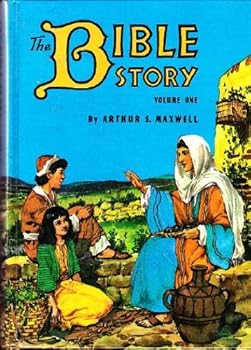
61hKdL-xLUL._SL350_.jpg


That story didn't come out and say that Jeptha slit her throat and burned her body on an altar and for many years I convinced myself that his daughter just became a perpetual virgin because it did say that she asked for time to "mourn her virginity." But the Bible does come back and say he "did according to his vow." Okay. So Jeptha was the scum of the earth judge that won a great battle but came back and did a great evil. I can live with that. Only he showed up later in Hebrews 11 in the hall of faithful Bible heros! He's listed right along with David and Samuel and Sampson and Gideon and Barak! (Incidentally all of those got a VeggieTales show except Jeptha and Barack. I think a Barack cartoon would have been cute with Deborah leading the battle because Barak was too chicken. I'm not sure what they would have done about Jael driving a tent stake through the head of skull of King Jabin but maybe they could just have her superglue his head to a wagon wheel to keep their G rating?) Back to Jeptha. When I found this out I was pissed. So many better heros, like Deborah for example, or Daniel or Joshua or ANYBODY but Jeptha, could have been named.

And why to I say God allowed the child sacrifice? Because He could have stopped it but didn't. We are talking about the age of miracles with rams in the thicket and strong men like Sampson being suicide bombers with their bare hands, and the Red Sea and Jordan River being parted. A simple "I don't need you do do this" would have been sufficient. And for that to no be the reason to justify genocide? Yeah....that makes no sense. It makes even less sense that children was condemned to be murdered by the sword because adults in their society were murdering children. When Jacobs sons murdered a whole town of men because the Prince of the town slept with their sister and then offered to marry her, at least they spared the women and young children. And Jacob still told them they made him a "stink" to the rest of the inhabatints of the land.

Anyway, I don't have a good answer for why this happened.
 
Are you saying God allowed someone to offer a child sacrifice? Please be careful what you say about God. I mean that with love, respect, and humility.

Here's an explanation I found on reddit. I'm not sure how to link directly to it, so I'll quote it here, and also include the link.


This explanation has always been my understanding, and I don't know how someone could possibly make such a bold claim otherwise.

Arc_the_lad1y ago
Curious about the end of Judges 11

Here's the answer I gave last time this was brought up:

What are we supposed to do with this story? Why would God allow Jephthah to sacrifice his daughter- while she is alive no less? Why would he Jep. be said that his daughter of all people greeted him? Who else would come out? What are we supposed to learn from this story?

It's always made me kind of uncomfortable- what are we supposed to see in the story of Jephthah? (Sorry that all of these questions snowballed.)

This is a case of not enough context and critical reading.

Way before Jephthah comes to the scene, God had already Moses tell the Jews that human sacrifice, particularly by burning, is prohibited.

  • Deuteronomy 12:30-31 (KJV) 30 Take heed to thyself that thou be not snared by following them, after that they be destroyed from before thee; and that thou enquire not after their gods, saying, How did these nations serve their gods? even so will I do likewise. 31 Thou shalt not do so unto the LORD thy God: for every abomination to the LORD, which he hateth, have they done unto their gods; for even their sons and their daughters they have burnt in the fire to their gods.
Thus we know that Jephthah's daughter was not killed as no Law abiding priest is going accept his daughter as a burnt offering to the Lord. So what happened?

Jephthah made a foolish and unnecessary vow. However, the Bible is clear on what could made into a burnt sacrifice: only a bull, sheep, goat, turtledove, or pigeon.

  • Judges 11:29-31 (KJV) 29 Then the Spirit of the LORD came upon Jephthah, and he passed over Gilead, and Manasseh, and passed over Mizpeh of Gilead, and from Mizpeh of Gilead he passed over unto the children of Ammon. 30 And Jephthah vowed a vow unto the LORD, and said, If thou shalt without fail deliver the children of Ammon into mine hands, 31 Then it shall be, that whatsoever cometh forth of the doors of my house to meet me, when I return in peace from the children of Ammon, shall surely be the LORD'S, and I will offer it up for a burnt offering.
  • Leviticus 1:2-3, 10, 14 (KJV) 2 Speak unto the children of Israel, and say unto them, If any man of you bring an offering unto the LORD, ye shall bring your offering of the cattle, even of the herd, and of the flock. 3 If his offering be a burnt sacrifice of the herd, let him offer a male without blemish: he shall offer it of his own voluntary will at the door of the tabernacle of the congregation before the LORD. [...] 10 And if his offering be of the flocks, namely, of the sheep, or of the goats, for a burnt sacrifice; he shall bring it a male without blemish. [...] 14 And if the burnt sacrifice for his offering to the LORD be of fowls, then he shall bring his offering of turtledoves, or of young pigeons.
But Jephthah was the son of a prostitute who had been run out of his family home as a young man and then took up with a bad crowd. That kind of upbringing might explain why he ended up believing his daughter could be a legitimate burnt sacrifice.

  • Judges 11:2-3 (KJV) 2 And Gilead's wife bare him sons; and his wife's sons grew up, and they thrust out Jephthah, and said unto him, Thou shalt not inherit in our father's house; for thou art the son of a strange woman. 3 Then Jephthah fled from his brethren, and dwelt in the land of Tob: and there were gathered vain men to Jephthah, and went out with him.
After God gave Jephthah the victory he requested and he sees his daughter, believing she had to sacrifice by fire now, we are given additional info that shows she was not killed, but turned over to the service of the priesthood.

First, she requests 2 months to bewail her virginity? That doesn't make sense. If you're know you're going to die, you'd be bewailing your impending death not your virginity.

Second, it's redundant to remind the reader that a virgin who was sacrificed continued to remain a virgin after being sacrificed. If someone dies a virgin we already know they're staying a virgin. You don't need clarify that the dead virgin didn't get marry or had sex later on.

However, if the sacrifice was a lifetime term of service, then mentioning the sacrifice stayed a virgin until death is a confirmation that the virgin's lifetime of service was a valid sacrifice.

  • Judges 11:37-40 (KJV) 37 And she said unto her father, Let this thing be done for me: let me alone two months, that I may go up and down upon the mountains, and bewail my virginity, I and my fellows. 38 And he said, Go. And he sent her away for two months: and she went with her companions, and bewailed her virginity upon the mountains. 39 And it came to pass at the end of two months, that she returned unto her father, who did with her according to his vow which he had vowed: and she knew no man. And it was a custom in Israel, 40 That the daughters of Israel went yearly to lament the daughter of Jephthah the Gileadite four days in a year.
Third, Jephthah remained the judge of Israel for 6 more years after "sacrificing" his daughter. The judges were not anointed in the way kings were. They were people chosen by God specifically to become military leaders to deliver the Jews from their oppressors and refocus the nation back towards God. When Jephthah became a judge, the Jews were under attack by child-sacrificing Ammonites. There's no way the Jews, who after their deliverance from the Ammonites, and having a renewed desire to obey God (at least temporarily) were going to suffer a leader pulling plays from the same handbook that the pagans they just defeated had been using.

  • Judges 12:7 (KJV) And Jephthah judged Israel six years. Then died Jephthah the Gileadite, and was buried in one of the cities of Gilead.
  • Deuteronomy 18:10-12 (KJV) 10 There shall not be found among you any one that maketh his son or his daughter to pass through the fire, or that useth divination, or an observer of times, or an enchanter, or a witch, 11 Or a charmer, or a consulter with familiar spirits, or a wizard, or a necromancer. 12 For all that do these things are an abomination unto the LORD: and because of these abominations the LORD thy God doth drive them out from before thee.
 
Additional info regarding Judges 11:31 "and" translation.

The Core Dispute: The Letter Vav (ו)
In Hebrew, this single letter acts as a connector. Its meaning relies entirely on context.

Option A: "AND" (The Traditional View)
  • The Phrase: "It shall be the LORD's AND I will offer it up..."
  • Implication: Whatever comes out receives both actions. Since a person came out, she must be the Lord's property and be burned. This leads to the conclusion of human sacrifice.

Option B: "OR" (The Dedication View)
  • The Phrase: "It shall be the LORD's OR I will offer it up..."
  • Implication: Jephthah allows for two distinct possibilities:
    1. Human: Dedicated to the Lord (Sanctuary service).
    2. Animal: Offered as a burnt sacrifice.
    Since a human appeared, the second clause (sacrifice) was dropped.


Why "OR" is Grammatically Possible
Scholars who support the "OR" reading point to other verses where translating vav as "and" would be absurd.

  • Example: Exodus 21:17 says, "He that curseth his father or (vav) his mother shall surely be put to death."
  • Logic: If translated as "and," a person would only be punished if they cursed both parents simultaneously. The context demands "or."

Summary: If you accept the "OR" translation, Jephthah’s vow becomes a lawful religious dedication rather than a pagan murder, aligning perfectly with the view that she was given
to the Sanctuary like Samuel.
 
Are you saying God allowed someone to offer a child sacrifice? Please be careful what you say about God. I mean that with love, respect, and humility.

Here's an explanation I found on reddit. I'm not sure how to link directly to it, so I'll quote it here, and also include the link.
:rolleyes: I am being careful. That's why I said "allowed" rather than "accepted." And your Reddit link uses the same language,, allowed, only to come to the same child's conclusion I came to 50 years ago that she was a "perpetual virgin" but that does violence to the actual text. Here's the way Judges 11 would read if your Reddit thread was accurate.


29;Then the Spirit of the Lord came on Jephthah. He crossed Gilead and Manasseh, passed through Mizpah of Gilead, and from there he advanced against the Ammonites. 30 And Jephthah made a vow to the Lord: “If you give the Ammonites into my hands,

31 whatever comes out of the door of my house to meet me when I return in triumph from the Ammonites will be the Lord’s, and I will sacrifice it as a burnt offering.”

32 Then Jephthah went over to fight the Ammonites, and the Lord gave them into his hands. 33 He devastated twenty towns from Aroer to the vicinity of Minnith, as far as Abel Keramim. Thus Israel subdued Ammon.

34 When Jephthah returned to his home in Mizpah, who should come out to meet him but his daughter, dancing to the sound of timbrels! She was an only child. Except for her he had neither son nor daughter. 35 When he saw her, he tore his clothes and cried, “Oh no, my daughter! You have brought me down and I am devastated. I have made a vow to the Lord that I cannot break.”

36 “My father,” she replied, “you have given your word to the Lord. Do to me just as you promised, now that the Lord has avenged you of your enemies, the Ammonites. 37 ;But grant me this one request,” she said. “Give me two months to roam the hills and weep with my friends, because I will never marry.”

38c;“You may go,” he said. And he let her go for two months. She and her friends went into the hills and wept because she would never marry. 39 After the two months, she returned to her father, and he did to her as he had vowed. And she was a virgin.

From this comes the Israelite tradition 40 that each year the young women of Israel go out for four days to commemorate the daughter of Jephthah the Gileadite.
And after two months she went to her father so that he could do according to his vow but instead of doing that he was told by a prophet that he didn't actually have to kill his daughter but that she could be a perpetual virgin and a living sacrifice instead of a burnt offering. Thus each year the young women would go to her convent to mourn with her the loss of being able to get married but rejoice with her in her new life dedicated to God.

That's the "happy ending" I would have liked but just isn't there. As for Jeptha being allowed to remain a judge, the fact that he was willing to sacrifice a human at all and was only upset when it turned out to be his daughter itself should have barred him from further service! Seriously. That showed an extreme lack of judgment. And if you want to say "Well he never meant to sacrifice a human but really an animal that was lawful for sacrifice" then he never should have been under the impression that he was supposed to sacrifice his daughter in the first place. Seriously you're linking to mental gymnastics that I did decades ago.
 
It's literally not there. I also showed that the Hebrew word translated as "and" can be translated as "or" in certain context. It should clearly be "or" in this case. Nevertheless, the context very much implies she wasn't killed. It certainly doesn't suggest God "allowed" a child sacrifice.
 
It's literally not there. I also showed that the Hebrew word translated as "and" can be translated as "or" in certain context. It should clearly be "or" in this case. Nevertheless, the context very much implies she wasn't killed. It certainly doesn't suggest God "allowed" a child sacrifice.
.God allowed a lot of things. He allowed Daniel and his friends to be castrated. He allowed the killings of the babies in Bethlehem. He allowed Job's children to be killed. I get it. When I was a child I thought as a child and understood as a child. And the context doesn't "very much imply she wasn't killed." That's your wishful thinking. Again I get it. I thought that as a child.
 
Certainly my opinion, but it's very unlikely God would allow such a thing to happen in His name by a professed follower. The following context very much suggests she went into service at the sanctuary. The original Hebrew even allows for "or" instead of "and".

Nevertheless, if that's your position, so be it. Many others disagree. At least the info is there for those who are open to see it.
 
Certainly my opinion, but it's very unlikely God would allow such a thing to happen in His name by a professed follower. The following context very much suggests she went into service at the sanctuary. The original Hebrew even allows for "or" instead of "and".
Nope. I wish that's what it suggested but that does violence to the text. It said he (her father) did according to his vow. It doesn't say "She became dedicated to the Lord." His vow was a burnt offering. Putting an "and" versus an "or" doesn't change anything. But let's just swap out the and for or just for giggles.

After the two months, she returned to her father, or he did to her as he had vowed. Or she was a virgin.

That doesn't really fix anything. So now Judges, a book with very specific stories that people take as face value, becomes worse than an allegory. It becomes inconclusive babble that people can reinterpret as they wish. You're uncomfortable with Sampson basically being a kamikaze / suicide bomber? (Seeking to die with his enemies). Now you can just magically say "Well....maybe Sampson REALLY said "God if I die with my enemies then it's okay." There's all sorts of other verses in the Bible that can be magically reinterpreted however anybody wants just because the straightforward reading makes someone uncomfortable.
Nevertheless, if that's your position, so be it. Many others disagree. At least the info is there for those who are open to see it.
Oh I'm sure many people do agree with it. I agreed with it myself at age 7. I read into the Bible what I wanted to see. I think that's a very natural thing to do.
 
Judges 11:31 in KJV reads

Then it shall be, that whatsoever cometh forth of the doors of my house to meet me, when I return in peace from the children of Ammon, shall surely be the LORD'S, AND I will offer it up for a burnt offering.

Based on context should read OR instead of AND. This is where I am talking about it. The straight reading of the text suggests so. The rest of the context of the Bible also suggests the same. He didn't allow Abraham to sacrifice his son, why would He let Jepthah? Makes no sense. When in doubt align with what the rest of the Bible says.
 
Here's some additional examples where God intervenes in similar circumstances, suggesting he wouldn't allow Jepthah to actually sacrifice his daughter, if that is what he tried to do (big if). Just makes more sense she went into service at the temple. I'll rest my case here for now.

1. The Precedent of Divine Intervention (Genesis 20)
God stops the innocent from sinning.
When King Abimelech unknowingly took Abraham's wife (thinking she was single), God intervened in a dream to stop him. God said, "I also withheld thee from sinning against me" (Gen 20:6). This proves that when a person's heart is right, God steps in to prevent them from committing a terrible mistake out of ignorance.

2. The Precedent of Community Intervention (1 Samuel 14)
God uses others to stop foolish vows.
King Saul made a rash vow that required him to kill his own son, Jonathan. Even though the vow was made to God, the people of Israel intervened, saying, "Shall Jonathan die... Far from it!" They rescued Jonathan, preventing the death. This shows that God does not require the fulfillment of foolish vows at the cost of human life.
 
Judges 11:31 in KJV reads

Then it shall be, that whatsoever cometh forth of the doors of my house to meet me, when I return in peace from the children of Ammon, shall surely be the LORD'S, AND I will offer it up for a burnt offering.
That's still barbaric. So if it was a servant girl then he would have murdered her but since it was his own child he decided to take option 2? Or perhaps you think he meant "If it's an animal I'll offer it as a burnt offering, but if its a human I'll dedicate it to the Lord without kiling it?" Okay. Then why the hell did he rent his clothes because it was his daughter? Hannah didn't rent her clothes at the thought of turning Samuel over to Eli. And why was his daughter not given a name? There is no other case in the Bible that I can think of where someone was dedicated to the Lord for life and that person 1) was not named and 2) you didn't hear from that person again. No. That makes no sense. Wishful thinking on your part.

Based on context should read OR instead of AND. This is where I am talking about it. The straight reading of the text suggests so. The rest of the context of the Bible also suggests the same. He didn't allow Abraham to sacrifice his son, why would He let Jepthah? Makes no sense. When in doubt align with what the rest of the Bible says.
Why did God allow Abraham to marry his sister (incest), Jacob to marry his two cousins who were sisters (incest and polygamy), David to murder Uriah and take his wife (sure God punished David but he didn't intervene and stop it), for a lying spirit to enter into Ahab's prophets who then convinced Ahab and Jehosaphat to go to war against Syria (sure, Ahab needed to die and Jehosaphat was spared but I bet a lot of good soldiers from Judah died in the battle), and...the list goes on? The bottom line is God never told Jeptha to make his stupid vow in the first place. And he could have done the right thing and said "Sorry Lord. That was a dumb thing to say. I'm not going through with this. Strike me down if you have to but I'm not." Later in the Bible when King Saul made a similar vow, he was actually going to go through with it (killing Jonathan because he ate some honey when Saul had declared a fast on pain of death), the other soldiers stood in the way and stopped it. But Jonathan was going to allow Saul to kill him! I'm sure Jonathan was well versed in the Abraham / Isaac story and he might have believed what I believe about the Jeptha story. Anyhow, I'm not in "doubt" here. I don't need to make up something just to feel good about my religion.
 
Or perhaps you think he meant "If it's an animal I'll offer it as a burnt offering, but if its a human I'll dedicate it to the Lord without kiling it?"
Yes

In Judges 11:31, Jephthah says: "shall surely be the LORD'S, and I will offer it up for a burnt offering."

  • The Hebrew letter vav is usually translated as "and," but it can also mean "OR."
  • Alternative Translation: Many scholars argue the vow actually meant: "It shall be the LORD's [if it is a person], OR I will offer it as a burnt offering [if it is an animal]."
  • Since a human walked out, the first part of the vow applied: she became "the Lord's" (dedicated property of the sanctuary).

Okay. Then why ... did he rent his clothes because it was his daughter?
He was in many ways losing his daughter. She also would not be able to marry. He would no longer have the privilege of watching his daughter grow every day and spend time with her, and he wouldn't have the privilege of seeing her get married and having her own children. She was also his only child, so he would have no descendants. Completely reasonable response.

Hannah didn't rent her clothes at the thought of turning Samuel over to Eli.
Completely different situation. She promised God to devote her child to the sanctuary if He would bless her with one. She wasn't able to have a child before this time. She was incredibly sorrowful. God blessed her with a child and she was elated to fulfill her promise.

And why was his daughter not given a name? There is no other case in the Bible that I can think of where someone was dedicated to the Lord for life and that person 1) was not named and 2) you didn't hear from that person again. No. That makes no sense. Wishful thinking on your part.
Opinion and speculation.

Why did God allow Abraham to marry his sister (incest), Jacob to marry his two cousins who were sisters (incest and polygamy), David to murder Uriah and take his wife (sure God punished David but he didn't intervene and stop it), for a lying spirit to enter into Ahab's prophets who then convinced Ahab and Jehosaphat to go to war against Syria (sure, Ahab needed to die and Jehosaphat was spared but I bet a lot of good soldiers from Judah died in the battle), and...the list goes on?
Those were all sinful acts not done out of ignorance. God doesn't prevent all sin from occurring.

The bottom line is God never told Jeptha to make his stupid vow in the first place.
Correct.

Later in the Bible when King Saul made a similar vow, he was actually going to go through with it (killing Jonathan because he ate some honey when Saul had declared a fast on pain of death), the other soldiers stood in the way and stopped it.
God used the soldiers to stop it.

I'm sure Jonathan was well versed in the Abraham / Isaac story and he might have believed what I believe about the Jeptha story. Anyhow, I'm not in "doubt" here. I don't need to make up something just to feel good about my religion.
Speculation. The most simple explanation is she wasn't killed.

"And it came to pass at the end of two months, that she returned unto her father, who did with her according to his vow which he had vowed: and she knew no man." (Judges 11:39)

It pretty much tells you the conclusion right there. It doesn't say "... and she was sacrificed as a burnt offering." It says ".... and she knew no man."

To be honest with you, it's just very plain reading of the text to come to this conclusion.
 
Yes

In Judges 11:31, Jephthah says: "shall surely be the LORD'S, and I will offer it up for a burnt offering."

  • The Hebrew letter vav is usually translated as "and," but it can also mean "OR."
  • Alternative Translation: Many scholars argue the vow actually meant: "It shall be the LORD's [if it is a person], OR I will offer it as a burnt offering [if it is an animal]."
  • Since a human walked out, the first part of the vow applied: she became "the Lord's" (dedicated property of the sanctuary).


He was in many ways losing his daughter. She also would not be able to marry. He would no longer have the privilege of watching his daughter grow every day and spend time with her, and he wouldn't have the privilege of seeing her get married and having her own children. She was also his only child, so he would have no descendants. Completely reasonable response.


Completely different situation. She promised God to devote her child to the sanctuary if He would bless her with one. She wasn't able to have a child before this time. She was incredibly sorrowful. God blessed her with a child and she was elated to fulfill her promise.


Opinion and speculation.


Those were all sinful acts not done out of ignorance. God doesn't prevent all sin from occurring.


Correct.


God used the soldiers to stop it.


Speculation. The most simple explanation is she wasn't killed.

"And it came to pass at the end of two months, that she returned unto her father, who did with her according to his vow which he had vowed: and she knew no man." (Judges 11:39)

It pretty much tells you the conclusion right there. It doesn't say "... and she was sacrificed as a burnt offering." It says ".... and she knew no man."

To be honest with you, it's just very plain reading of the text to come to this conclusion.

Nope. It's twisted mental gymnastics that you've come up with to explain away the straight forward reading that you simply find too uncomfortable to believe.
 
To be honest it was the first way I ever read it. I was surprised when I was told people interpret it the way you do. It really is the most straight forward reading. Nevertheless, you are free to interpret as you wish.
 
To be honest it was the first way I ever read it. I was surprised when I was told people interpret it the way you do. It really is the most straight forward reading. Nevertheless, you are free to interpret as you wish.
Having to do mental gymnastics and argue over whether "and" actually means "or" is not a straightforward reading no matter how you just to justify that.
 
I don't think it's mental gymnastics. It's always been my personal view.

HOWEVER, my recent discussion with ClaytonB has my rethinking my position here regarding Jepthtah. I'm preparing a post in response to ClaytonB... in how the context of Genesis 6 should be interpreted. It's making me rethink my position on Judges 11:31. I still assert that it's not entirely clear, but I'm AM assuming too much in the context. If Jepthah went through with it, he was obviously ignorant of Levitical law. I still take issue with the title of your thread "When Jehovah allowed a Molech like child sacrifice"... maybe not intentional, but it almost implies he was ok with it. The heathen nations were also child sacrificing and of course God "allowed" those, and also all other sins that have been committed. Why God allows any sin at all is for another discussion, but I'm sure you're familiar with it.

If Jephtah knew Leviticus 5 he would have known he did not have to keep such a foolish oath.

Leviticus 5
4 Or if a soul swear, pronouncing with his lips to do evil, or to do good, whatsoever it be that a man shall pronounce with an oath, and it be hid from him; when he knoweth of it, then he shall be guilty in one of these.

5 And it shall be, when he shall be guilty in one of these things, that he shall confess that he hath sinned in that thing:

6 And he shall bring his trespass offering unto the Lord for his sin which he hath sinned, a female from the flock, a lamb or a kid of the goats, for a sin offering; and the priest shall make an atonement for him concerning his sin.

7 And if he be not able to bring a lamb, then he shall bring for his trespass, which he hath committed, two turtledoves, or two young pigeons, unto the Lord; one for a sin offering, and the other for a burnt offering.

8 And he shall bring them unto the priest, who shall offer that which is for the sin offering first, and wring off his head from his neck, but shall not divide it asunder:

9 And he shall sprinkle of the blood of the sin offering upon the side of the altar; and the rest of the blood shall be wrung out at the bottom of the altar: it is a sin offering.

10 And he shall offer the second for a burnt offering, according to the manner: and the priest shall make an atonement for him for his sin which he hath sinned, and it shall be forgiven him.

11 But if he be not able to bring two turtledoves, or two young pigeons, then he that sinned shall bring for his offering the tenth part of an ephah of fine flour for a sin offering; he shall put no oil upon it, neither shall he put any frankincense thereon: for it is a sin offering.

12 Then shall he bring it to the priest, and the priest shall take his handful of it, even a memorial thereof, and burn it on the altar, according to the offerings made by fire unto the Lord: it is a sin offering.

13 And the priest shall make an atonement for him as touching his sin that he hath sinned in one of these, and it shall be forgiven him: and the remnant shall be the priest's, as a meat offering.

In final summary, thank you, jmdrake, for helping me come to more Biblical understanding of this text. If I don't talk to you again soon, then I hope you have a happy and very blessed Christmas!
 
Back
Top