

PAF
Member
- Joined
- Feb 26, 2012
- Messages
- 13,965
by Jacob G. Hornberger
September 23, 2025
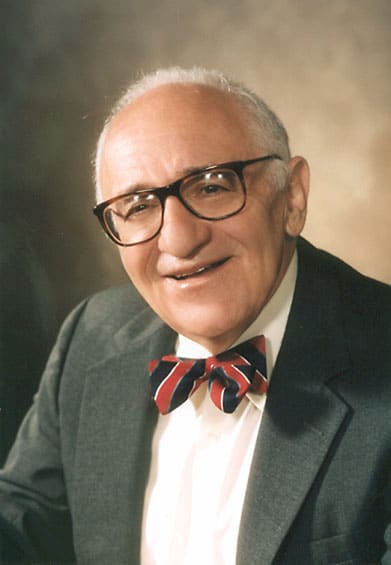
In 1986, I was attending a Mises Institute conference, where I had my first and only encounter with the libertarian intellectual giant Murray Rothbard. My friend Richard Ebeling introduced me to Rothbard in the following manner: “Hello, Murray. I would like to introduce you to my lawyer, Jacob Hornberger.” I held out my hand and said “It is an honor to meet you, Professor Rothbard.” He responded in a very cool and brusque manner. Permit me to explain why.
In 1983, after my law partner (who was my father) had died in my hometown of Laredo, Texas, I moved to Dallas, where I established a new law office. I had already discovered libertarianism and Austrian economics and was voraciously reading everything I could find on these two subjects.
I soon discovered that the head of the economics department at the University of Dallas, a man named Sam Bostaph, was an Austrian economist. I contacted him and asked him if he would be willing to give me a weekly tutorial in Austrian economics. He asked me to draw up a list of books I had read in economics, and we set up an appointment.
After reviewing my list of books and discovering that I was an economics major in college (where I was taught Keynesian economics), Sam recommended that we not begin with a study of Austrian economics. He recommended instead that we go back to Adam Smith’s Wealth of Nations and start there. So, for the next several months, Sam and I met weekly on Fridays for a two-hour, chapter-by-chapter analysis of Smith’s treatise. From there, we did the same with David Ricardo’s Principles and then reviewed generally works by other classical economists.
We finally reached the founder of the Austrian school, Carl Menger, and did a chapter-by-chapter analysis of his book Principles of Economics. We then did a general review of Eugen von Böhm-Bawerk’s Capital and Interest.
When we were about to start Ludwig von Mises’s magnum opus Human Action, Sam told me that he had hired a person who he described as “the person in your generation who knows more about Austrian economics than anyone else in your generation.” As much as he liked receiving my money, he said, he recommended my continuing the tutorial by retaining his newly hired teacher, Richard Ebeling.
So, Richard and I became good friends. Every Friday afternoon, we would meet for two hours for a chapter-by-chapter analysis of Human Action, after which we would adjourn for a late lunch at a great nearby Mexican restaurant. Richard likes to say that when the gig ended when I accepted a position in 1987 as program director with The Foundation for Economic Education in New York, he was greatly depressed because he was losing his free lunch.
In 1986, I was 36 years old and still a trial attorney in Dallas. In my process of self-education in libertarianism and Austrian economics , I had discovered Murray Rothbard, who had received his doctorate under Mises, and I had read some of his books.
One day at one of our weekly sessions, Richard told me that he was embroiled in some big intellectual dispute within the Austrian economics movement. I don’t recall exactly what the topic was but I do remember that it was very academic and way over my head. He told me that Rothbard, who could be quite caustic, intended to criticize him in some soon-to-be-published academic article and was even going so far as to call Richard an “ex-Misesian” in that article.
Richard was somewhat despondent over this big intellectual dispute and especially because one of his intellectual Austrian heroes was going to publicly refer to him as an “ex-Misesian.” I recommended that Richard employ me as his attorney and that we send Rothbard a formal letter demanding that he retract the offending accusation about Richard or else face a lawsuit for defamation.
So I sent Rothbard my letter, certified mail, return receipt requested. A copy of my letter is posted here. At the same time, Richard sent copies of my letter to every person in the Austrian economics movement with whom Richard was acquainted. My demand letter to Murray Rothbard became legendary within the Austrian economics movement.
Shortly thereafter, Richard and I went to that Mises Institute conference, where Murray treated me coolly and brusquely when Richard introduced me as his attorney.
A short while later at that same conference, Richard had a separate conversation with Murray’s wife Joey, who, like Murray, was a good friend of Richard’s. She told Richard that when Murray received my letter, he was totally convinced that it was entirely serious. He told Joey that he would vigorously fight the lawsuit and, if necessary, would “take it all the way to the Supreme Court.” I suspect she finally was able to convince him that the letter was based entirely on parody and ridicule.
In any event, I went on to FEE in New York and then later founded FFF. Richard, who Murray had called an “ex-Misesian,” went on to Hillsdale College, where he was named the Ludwig von Mises Professor of Economics, then went on to become the president of FEE, and now teaches Austrian economics at The Citadel.
Continue:
 www.fff.org
September 23, 2025
In 1986, I was attending a Mises Institute conference, where I had my first and only encounter with the libertarian intellectual giant Murray Rothbard. My friend Richard Ebeling introduced me to Rothbard in the following manner: “Hello, Murray. I would like to introduce you to my lawyer, Jacob Hornberger.” I held out my hand and said “It is an honor to meet you, Professor Rothbard.” He responded in a very cool and brusque manner. Permit me to explain why.
In 1983, after my law partner (who was my father) had died in my hometown of Laredo, Texas, I moved to Dallas, where I established a new law office. I had already discovered libertarianism and Austrian economics and was voraciously reading everything I could find on these two subjects.
I soon discovered that the head of the economics department at the University of Dallas, a man named Sam Bostaph, was an Austrian economist. I contacted him and asked him if he would be willing to give me a weekly tutorial in Austrian economics. He asked me to draw up a list of books I had read in economics, and we set up an appointment.
After reviewing my list of books and discovering that I was an economics major in college (where I was taught Keynesian economics), Sam recommended that we not begin with a study of Austrian economics. He recommended instead that we go back to Adam Smith’s Wealth of Nations and start there. So, for the next several months, Sam and I met weekly on Fridays for a two-hour, chapter-by-chapter analysis of Smith’s treatise. From there, we did the same with David Ricardo’s Principles and then reviewed generally works by other classical economists.
We finally reached the founder of the Austrian school, Carl Menger, and did a chapter-by-chapter analysis of his book Principles of Economics. We then did a general review of Eugen von Böhm-Bawerk’s Capital and Interest.
When we were about to start Ludwig von Mises’s magnum opus Human Action, Sam told me that he had hired a person who he described as “the person in your generation who knows more about Austrian economics than anyone else in your generation.” As much as he liked receiving my money, he said, he recommended my continuing the tutorial by retaining his newly hired teacher, Richard Ebeling.
So, Richard and I became good friends. Every Friday afternoon, we would meet for two hours for a chapter-by-chapter analysis of Human Action, after which we would adjourn for a late lunch at a great nearby Mexican restaurant. Richard likes to say that when the gig ended when I accepted a position in 1987 as program director with The Foundation for Economic Education in New York, he was greatly depressed because he was losing his free lunch.
In 1986, I was 36 years old and still a trial attorney in Dallas. In my process of self-education in libertarianism and Austrian economics , I had discovered Murray Rothbard, who had received his doctorate under Mises, and I had read some of his books.
One day at one of our weekly sessions, Richard told me that he was embroiled in some big intellectual dispute within the Austrian economics movement. I don’t recall exactly what the topic was but I do remember that it was very academic and way over my head. He told me that Rothbard, who could be quite caustic, intended to criticize him in some soon-to-be-published academic article and was even going so far as to call Richard an “ex-Misesian” in that article.
Richard was somewhat despondent over this big intellectual dispute and especially because one of his intellectual Austrian heroes was going to publicly refer to him as an “ex-Misesian.” I recommended that Richard employ me as his attorney and that we send Rothbard a formal letter demanding that he retract the offending accusation about Richard or else face a lawsuit for defamation.
So I sent Rothbard my letter, certified mail, return receipt requested. A copy of my letter is posted here. At the same time, Richard sent copies of my letter to every person in the Austrian economics movement with whom Richard was acquainted. My demand letter to Murray Rothbard became legendary within the Austrian economics movement.
Shortly thereafter, Richard and I went to that Mises Institute conference, where Murray treated me coolly and brusquely when Richard introduced me as his attorney.
A short while later at that same conference, Richard had a separate conversation with Murray’s wife Joey, who, like Murray, was a good friend of Richard’s. She told Richard that when Murray received my letter, he was totally convinced that it was entirely serious. He told Joey that he would vigorously fight the lawsuit and, if necessary, would “take it all the way to the Supreme Court.” I suspect she finally was able to convince him that the letter was based entirely on parody and ridicule.
In any event, I went on to FEE in New York and then later founded FFF. Richard, who Murray had called an “ex-Misesian,” went on to Hillsdale College, where he was named the Ludwig von Mises Professor of Economics, then went on to become the president of FEE, and now teaches Austrian economics at The Citadel.
Continue:
My Encounter with Murray Rothbard – The Future of Freedom Foundation
In 1986, I was attending a Mises Institute conference, where I had my first and only encounter with the libertarian intellectual giant Murray Rothbard. My friend Richard Ebeling introduced me to Rothbard in the following manner: “Hello, Murray. I would like to introduce you to my lawyer, Jacob...
www.fff.org


