Greenpeace Founder to Senate: "Man-Made Global Warming Unproven"

Unpolished rice (non GMO) did that a long time ago.

The aleurone layer (in unpolished rice) is usually removed by milling as it turns rancid on storage, especially in tropical areas; and the remaining endosperm lacks pro-vitamin A.
 
Golden Rice doesn't solve "a lot of health problems." It solves one very specific health problem, which is a vitamin A deficiency.

Vitamin A deficiency can manifest in more than one way, depending on the person and their specific needs. You, one of the great critical minds of our time, should know this.
 
Vitamin A deficiency can manifest in more than one way, depending on the person and their specific needs. You, one of the great critical minds of our time, should know this.

The most common cause of blindness in the world is Vitamin A deficiency, which Golden Rice aims to address, and has done quite successfully when tested. Sadly, there are many sadistic people in the world who don't care that hundreds of thousands of children go blind every year due to lack of Vitamin A which has prevented the widespread use of Golden Rice.
 
The most common cause of blindness in the world is Vitamin A deficiency, which Golden Rice aims to address, and has done quite successfully when tested. Sadly, there are many sadistic people in the world who don't care that hundreds of thousands of children go blind every year due to lack of Vitamin A.

Yes, but it has more than one manifestation.
 
Still can't find the exact researcher that I have read about many years ago, but from Wiki:

"In 1897, Dr. Christiaan Eijkman, a Dutch physician and pathologist, demonstrated that beriberi is caused by poor diet, and discovered that feeding unpolished rice (instead of the polished variety) to chickens helped to prevent beriberi. The following year, Sir Frederick Hopkins postulated that some foods contained "accessory factors" – in addition to proteins, carbohydrates, fats, and salt – that were necessary for the functions of the human body.[22][23] In 1901, Gerrit Grijns (May 28, 1865 – November 11, 1944), a Dutch physician and assistant to Christiaan Eijkman in the Netherlands, correctly interpreted the disease as a deficiency syndrome,[24] and between 1910 and 1913, Dr. Edward Bright Vedder established that an extract of rice bran is a treatment for beriberi.[citation needed] In 1929, Eijkman and Hopkins were awarded the Nobel Prize for Physiology or Medicine for their discoveries."
 
Why don't we forget that question and go back to the other ones you tried to avoid? I'm not so interested in that one, but I'm intrigued by the others. You know the ones.

No, this is about what I expected. I did not expect anything I said or did would convince you of believing anything you don't want to believe. That's not being a free thinker - that's actually just the opposite.

When asked to lay down some ground rules, you refused, because you knew it meant you wouldn't be able to move the goal posts. So you tried an end run.

I am done with you tonight.
 
No, this is about what I expected. I did not expect anything I said or did would convince you of believing anything you don't want to believe. That's not being a free thinker - that's actually just the opposite.

When asked to lay down some ground rules, you refused, because you knew it meant you wouldn't be able to move the goal posts. So you tried an end run.

I am done with you tonight.

I was honestly just trying to get you to answer the other questions. What do I have to say to get you to do that? You run and hide the first time you can find a sem-believable exit where you can save face.

Find me a study that says there is a certain percentage of scientists who believe in climate change, with clearly defined terms. There, those are your ground rules. Happy?

Now can we get you to answer the other questions that you deliberately tried to avoid? Is it too much to ask of you to simply answer the damn questions?
 
Last edited:
Define "secondary." Blindness is a symptom, not a disease in and of itself.

Secondary as in not as common and comes after.

Blindness is a symptom, the condition which causes it is vitamin A deficiency. It causes night blindness, xerophthalmia, and keratomalacia.
 
Secondary as in not as common and comes after.

Blindness is a symptom, the condition which causes it is vitamin A deficiency. It causes night blindness, xerophthalmia, and keratomalacia.

I'm pretty sure that's not all that vitamin A deficiency causes. The body has systems, many of which are interconnected. If vitamin A deficiency is messing with your eyesight, it usually means there are other problems with the systems connected to the eyes. There are different types of visual problems, but not only that, the brain is usually affected if the eyes are because the visual cortex is directly connected to the rest of the brain. The point being that a problem, even if perceived as being minor and "secondary" can be a serious indication of poor health. If your eyes aren't working well, then your memory may be affected along with the systems that are interconnected with eyesight. There are a variety of symptoms that can arise, so yes, vitamin A can solve "a lot of health problems". Saying blindness is the only thing it solves is very narrow-minded.
 
I'm pretty sure that's not all that vitamin A deficiency causes. The body has systems, many of which are interconnected. If vitamin A deficiency is messing with your eyesight, it usually means there are other problems with the systems connected to the eyes. There are different types of visual problems, but not only that, the brain is usually affected if the eyes are because the visual cortex is directly connected to the rest of the brain. The point being that a problem, even if perceived as being minor and "secondary" can be a serious indication of poor health. If your eyes aren't working well, then your memory may be affected along with the systems that are interconnected with eyesight. There are a variety of symptoms that can arise, so yes, vitamin A can solve "a lot of health problems". Saying blindness is the only thing it solves is very narrow-minded.

Where did I say that?

What I said is that vitamin A deficiency is a direct cause of certain forms of blindness. Are you disputing that?
 

So, they think that people that live in dirt huts in the desert should just eat more vegetables? Do they realize that there would have to be massive infrastructure improvements, like irrigation,distribution, soil management, agricultural education, and even overall economic development?

Rather than suggesting that those other technologies should collectively be used instead of biotechnology, it would be more logical to suggest that those technologies should be collectively used along WITH biotechnology.
 
So, they think that people that live in dirt huts in the desert should just eat more vegetables? Do they realize that there would have to be massive infrastructure improvements, like irrigation,distribution, soil management, agricultural education, and even overall economic development?

Rather than suggesting that those other technologies should collectively be used instead of biotechnology, it would be more logical to suggest that those technologies should be collectively used along WITH biotechnology.

Maybe nothing wrong with "brown rice" for vitamin A , I don't know. But it has been shown unpolished rice provided nutrition before GMO entered the picture.
 
Last edited:
If he did eat GMO, what makes you say it is low quality food that would affect his intelligence?

Patrick Moore has expressed support for GMOs such as golden rice, which helps prevent vitamin A deficiency in under developed countries, saving hundreds of thousands of people from blindness every year.


THE "GOLDEN RICE" HOAX -
When Public Relations replaces Science

by Dr. Vandana Shiva


--------------------------------------------------------------------------------

"Golden Rice": A technology for creating Vitamin A deficiency.


Golden rice has been heralded as the miracle cure for malnutrition and hunger of which 800m members of

the human community suffer.


Herbicide resistant and toxin producing genetically engineered plants can be objectionable because of their

ecological and social costs. But who could possibly object to rice engineered to produce vitamin A, a

deficiency found in nearly 3 million children, largely in the Third World?


As remarked by Mary Lou Guerinot, the author of the Commentary on Vitamin A rice in Science, one

can only hope that this application of plant genetic engineering to ameliorate human misery without regard

to short term profit will restore this technology to political acceptability.

Unfortunately, Vitamin A rice is a hoax, and will bring further dispute to plant genetic engineering where

public relations exercises seem to have replaced science in promotion of untested, unproven and

unnecessary technology.

The problem is that vitamin A rice will not remove vitamin A deficiency (VAD). It will seriously

aggravate it. It is a technology that fails in its promise.


Currently, it is not even known how much vitamin JA the genetically engineered rice will produce. The

goal is 33.3% micrograms/100g of rice. Even if this goal is reached after a few years, it will be totally

ineffective in removing VAD.


Since the daily average requirement of vitamin A is 750 micrograms of vitamin A and 1 serving contains

30g of rice according to dry weight basis, vitamin A rice would only provide 9.9 micrograms which is

1.32% of the required allowance. Even taking the 100g figure of daily consumption of rice used in the

technology transfer paper would only provide 4.4% of the RDA.

In order to meet the full needs of 750 micrograms of vitamin A from rice, an adult would have to

consume 2 kg 272g of rice per day. This implies that one family member would consume the entire

family ration of 10 kg. from the PDS in 4 days to meet vitaminA needs through "Golden rice".


This is a recipe for creating hunger and malnutrition, not solving it.

Besides creating vitamin A deficiency, vitamin A rice will also create deficiency in other micronutrients

and nutrients. Raw milled rice has a low content of Fat (0.5g/100g). Since fat is necessary for vitamin A

uptake, this will aggravate vitamin A deficiency. It also has only 6.8g/100g of protein, which means less

carrier molecules. It has only 0.7g/100g of iron, which plays a vital role in the conversion of Betacarotene

(precursor of vitamin A found in plant sources) to vitamin A.

Superior Alternatives exist and are effective.

A far more efficient route to removing vitamin A deficiency is biodiversity conservation and propagation

of naturally vitamin A rich plants in agriculture and diets.

Continued...


Vandana Shiva
https://en.wikipedia.org/wiki/Vandana_Shiva
 
Nothing wrong with "brown rice" for vitamin A. But it has been shown unpolished rice provided nutrition before GMO entered the picture.
\
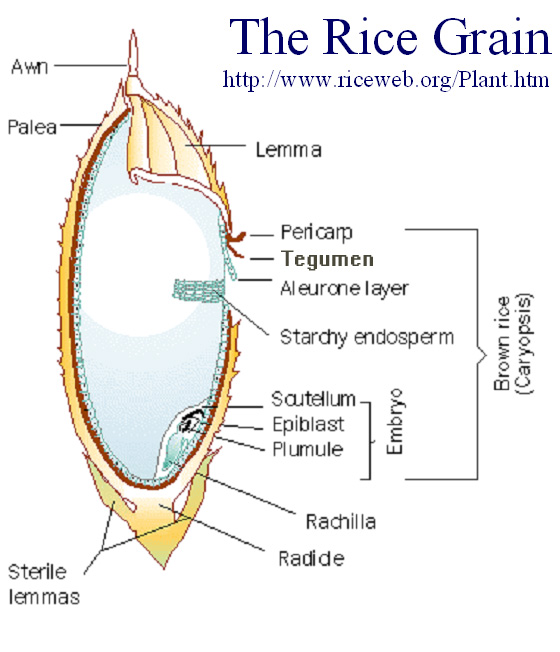
http://www.goldenrice.org/Content3-Why/why3_FAQ.php

Why not eat unmilled (brown) rice?

The natural oil-rich outer layers of the rice grain—the bran and the aleurone—are rich in some important nutrients, including vitamin B, and yet rice is generally consumed in its milled form, i.e. with the outer layers removed. If not removed, the oils in those layers undergo natural oxidation processes and the grain becomes rancid, affecting smell and taste very rapidly, particularly in tropical and sub-tropical climates. Milling improves the long-term storability of rice without loss of taste.

why_grain.jpg


Most people prefer to eat white rice

White rice is the most commonly consumed form of rice. Golden Rice will be more like white rice in that it will be consumed as milled or polished rice. But as opposed to brown rice, it will be capable of providing its health benefits even after milling. Golden Rice grains have a pleasant bright yellow or orange colour, although its appeal in rural areas remains to be investigated. Coloured rice landraces are eaten in many places, and coloured spices, like saffron, are often part of traditional cuisine. Sensitive social educational programs will be an integral part of Golden Rice deployment. Rice varieties with superior agronomic characteristics, i.e. that grow and yield well, will be not less important for the farmers who will grow the rice. Hence the importance of introducing the trait from the genetically modified lines into varieties grown locally by farmers in VAD areas. The trait is transferred from one rice plant to the another using conventional breeding techniques.
 
THE "GOLDEN RICE" HOAX -
one

can only hope that this application of plant genetic engineering to ameliorate human misery without regard

to short term profit will restore this technology to political acceptability.


She's one of the biggest eco-grifters in India. I am surprised it's taken you this long to cite her as an expert, but I knew it was coming. If there's a some grifter fishing for suckers, you always find your way onto their hooks. And when they're advocating for a position that will kill children, you double down.

The rice is given away for free, so it's pretty hard to imagine how "short term profit" factors into it at all.


Is Golden Rice a “hoax,” as Shiva claims?


Almost 700,000 children under the age of 5 die every year from Vitamin A deficiency disease. Golden Rice has been genetically engineered with enhanced production and accumulation of β-carotene in the grains. The American Journal of Clinical Nutrition reports that Golden rice contains up to 35 micrograms of β-carotene per gram of rice. A bowl of ~100-150 grams of cooked Golden Rice can provide as much as 60% of the recommended nutrient intake of vitamin A for 6-8 year old children. As little as 20% of the recommended daily allowance can mitigate or eliminate clinical symptoms such as blindness. Golden Rice also has a better conversion ratio for Provitamin A (which is turned into Vitamin A in our bodies) than leafy vegetables, carrots and other crops.


Shiva’s alternate proposed solution for promoting a ‘diversity of diet’ has not worked for the very poor who cannot afford to buy vegetables or fruits, or cannot devote the land on their subsistence farm to grow more of them.


Golden Rice is a product of the public sector with the realistic hope of saving the lives and sight of millions of children in the developing world. Despite its promise to help alleviate hunger, blindness and malnutrition, the vitamin enhanced rice has been met with significant opposition from environmental and anti-globalization activists, including Shiva. In August of 2013, activists converged on an experimental field trial of Golden Rice in the Philippines and violently ripped up the plants.

http://www.forbes.com/sites/jonenti...-celebrity-eco-goddess-or-dangerous-fabulist/
 
Last edited:
Back
Top