
tangent4ronpaul
Banned
- Joined
- May 11, 2007
- Messages
- 21,101
http://www.designntrend.com/article...crew-mars-lets-go-live-like-gods-on-venus.htm
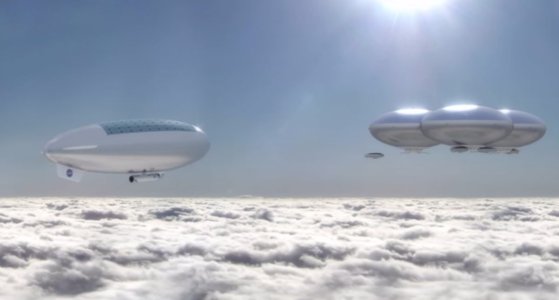
Despite the fact that planet Venus is so hot that a human would melt in it, NASA believes that mankind will be able to live in cloud cities in Venus' atmosphere.
Although the planet resembles something out of Dante's Inferno, it is nonetheless potentially stable for the fact that there is no air on the planet. This would make it easier to create floating cloud cities 50km above the planet's surface.
Researchers found that at that height, conditions would resemble Earth, like gravity and temperature, which they deem would sit at around 75 degrees Fahrenheit. The project, called HACOC (or High Altitude Venus Operational Concept) is just an idea.
Venus' skies compared to its surface are pretty pleasant. A few landers have made attempts to land on the surface of Venus but did not last very long before succumbing to the extreme conditions and boiling to a melt.
Chris Jones, of NASA, and colleagues revealed a five-phase plan to Evan Ackerman at IEEE Spectrum detailing how the project would initiate:
A robot would be dispatched to study the environment for any surprises. Afterwards, NASA would send a manned mission to orbit the planet. Depending on the success of the orbit, the crew would then sit on the planet's atmosphere and float among the clouds for a month. Eventually, more crews would be sent. The success of these four phases would then finally lead to the creation of floating cities on Venus.
Venus is much closer to Earth than Mars. It would only take 440 days for a mission to go and come back from Venus.
"If you did Venus first, you could get a leg up on advancing those technologies and those capabilities ahead of doing a human-scale Mars mission. It's a chance to do a practice run, if you will, of going to Mars," Dale Arney, another member of the HAVOC team, told Ackerman.
"Given that Venus's upper atmosphere is a fairly hospitable destination, we think it can play a role in humanity's future in space," Arney told Ackerman.
-t
Despite the fact that planet Venus is so hot that a human would melt in it, NASA believes that mankind will be able to live in cloud cities in Venus' atmosphere.
Although the planet resembles something out of Dante's Inferno, it is nonetheless potentially stable for the fact that there is no air on the planet. This would make it easier to create floating cloud cities 50km above the planet's surface.
Researchers found that at that height, conditions would resemble Earth, like gravity and temperature, which they deem would sit at around 75 degrees Fahrenheit. The project, called HACOC (or High Altitude Venus Operational Concept) is just an idea.
Venus' skies compared to its surface are pretty pleasant. A few landers have made attempts to land on the surface of Venus but did not last very long before succumbing to the extreme conditions and boiling to a melt.
Chris Jones, of NASA, and colleagues revealed a five-phase plan to Evan Ackerman at IEEE Spectrum detailing how the project would initiate:
A robot would be dispatched to study the environment for any surprises. Afterwards, NASA would send a manned mission to orbit the planet. Depending on the success of the orbit, the crew would then sit on the planet's atmosphere and float among the clouds for a month. Eventually, more crews would be sent. The success of these four phases would then finally lead to the creation of floating cities on Venus.
Venus is much closer to Earth than Mars. It would only take 440 days for a mission to go and come back from Venus.
"If you did Venus first, you could get a leg up on advancing those technologies and those capabilities ahead of doing a human-scale Mars mission. It's a chance to do a practice run, if you will, of going to Mars," Dale Arney, another member of the HAVOC team, told Ackerman.
"Given that Venus's upper atmosphere is a fairly hospitable destination, we think it can play a role in humanity's future in space," Arney told Ackerman.
-t


